The Well of Barhout: Yemen's "Well of Hell" that locals have avoided for centuries
Locals call it the prison of the jinn and keep their distance. The first documented descent, in 2021, brought back a few answers and new questions.
- When
- October 2021
- Where
- Al-Mahra, Yemen
- Status
- Partly explained the main explanation is accepted; details remain open
By The Echoes of the Past team. Published November 2, 2026. 5 min read.
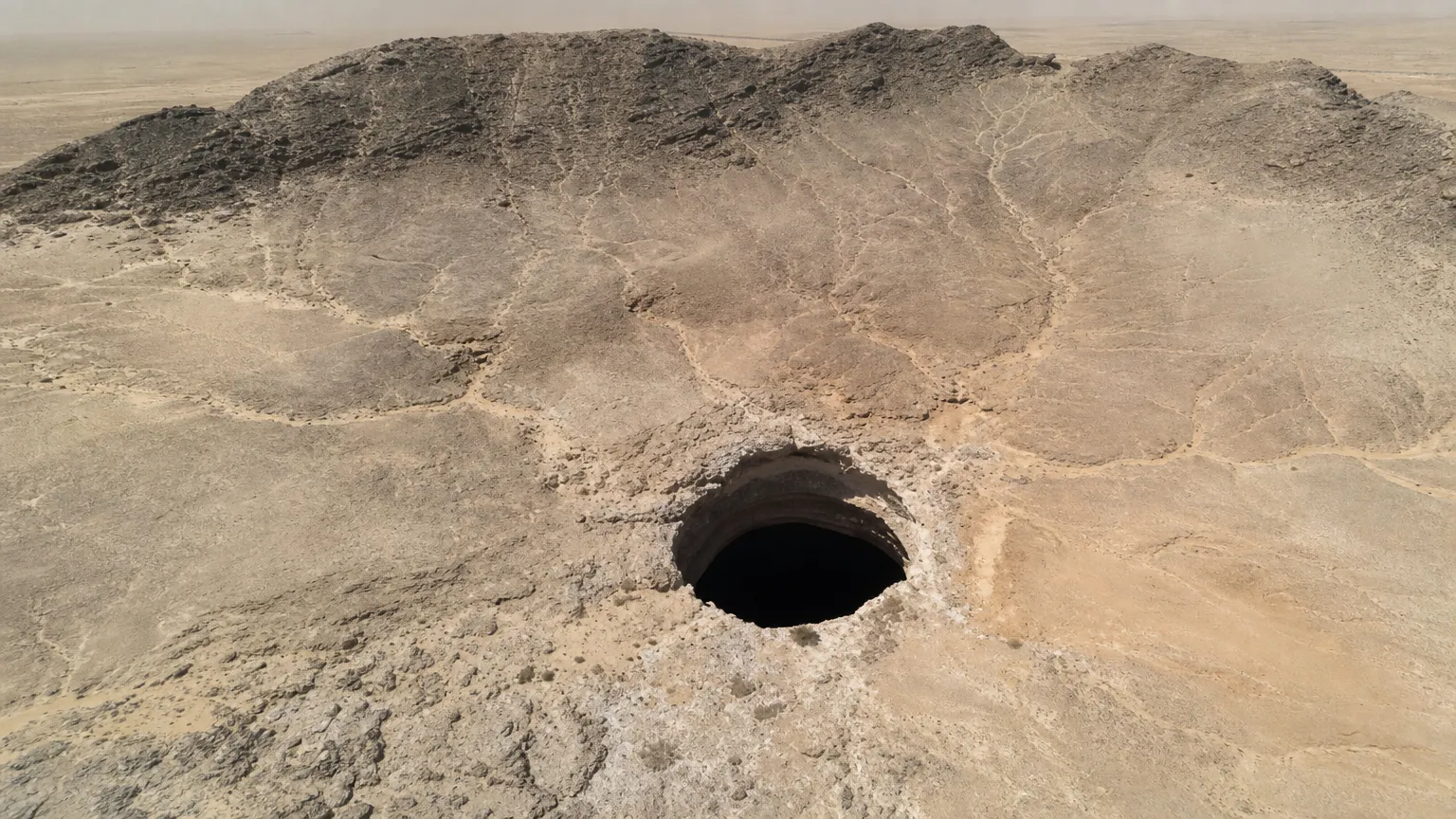
In the governorate of Al-Mahra, in the far east of Yemen near the border with Oman, there is a hole in the middle of the desert.
It is not a gentle crater. It is a nearly circular opening in the limestone, roughly 30 meters across at the surface, that drops straight down. The bottom cannot be seen from the rim. Birds and animals keep away from the area. Locals call the place Bī'r Brḥūt (the Well of Barhout) and, in a tradition that goes back centuries, avoid going near it.
Local Islamic tradition links the well to imprisoned spirits and jinn. Some say they hear sounds coming from the depths. Others describe a foul smell rising from the opening when the wind blows a certain way.
In October 2021, a team of Yemeni and Omani explorers made the first documented descent into the well. What they found was fascinating and, in some ways, more mysterious than expected.
The 2021 exploration
The expedition was organized by the Yemeni Association for Geological and Speleological Sciences. Eight explorers went down using rappelling gear. The descent took about two hours.
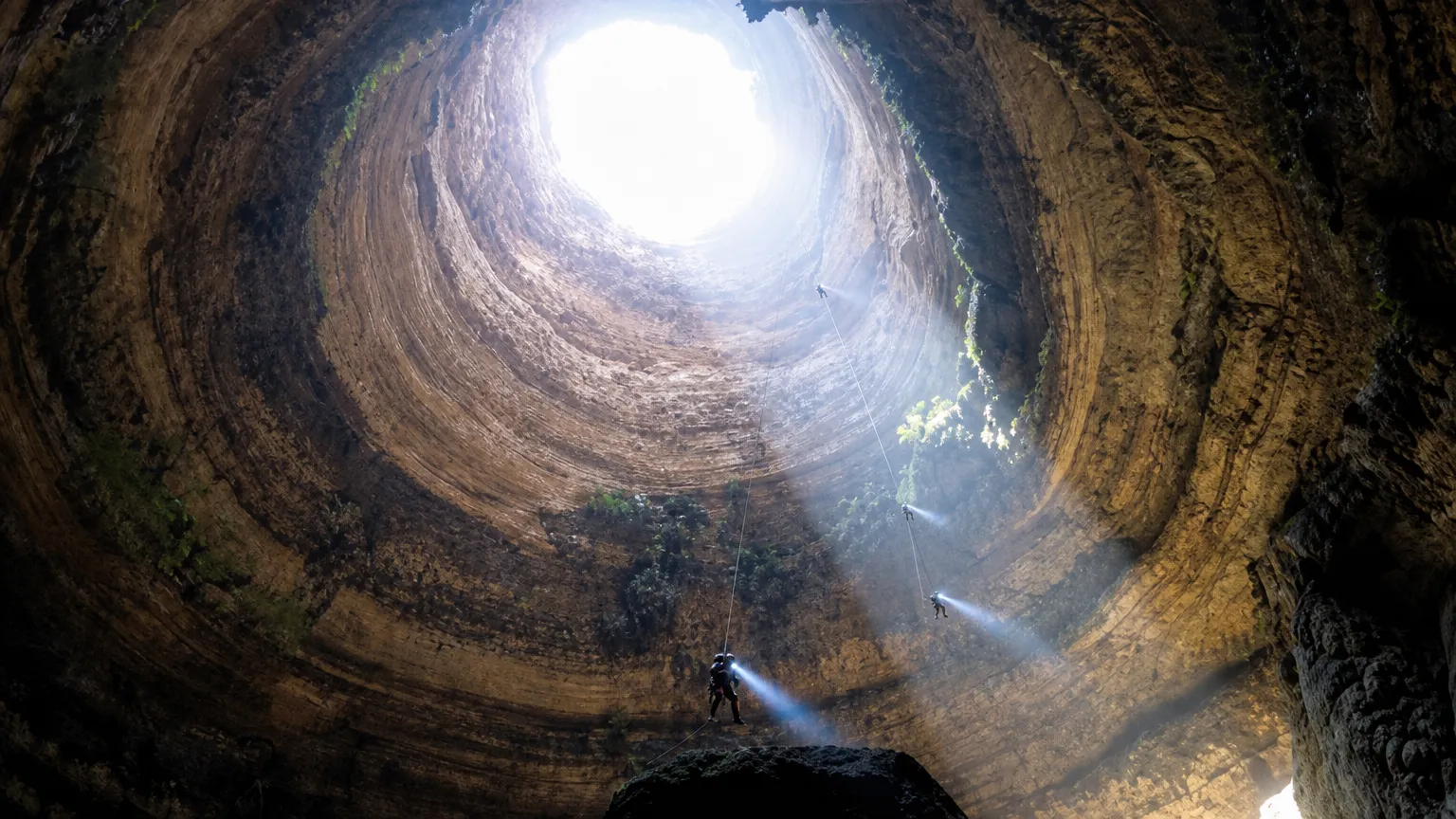
What the team found:
The well is about 112 meters deep down to the first main chamber. Its diameter changes on the way down, narrowing in some places and widening in others.
On the walls and the floor: limestone stalagmites and stalactites. Water: a considerable amount of it, more than they expected to find in a desert region. Animals: snakes (of a species not identified in the initial report), birds and small animals.
The smell: described by the explorers as "foul," consistent with decaying organic matter (animals that fell into the well over time) and possibly with geological gas emissions.
Total depth: uncertain. The team did not go beyond the main chamber at 112 meters. It is unclear whether the cavity continues past that point or whether there are more chambers further down.
What geology explains, and what it does not
Geologically, the Well of Barhout is a karst feature: a cavity formed when water dissolves limestone. The limestone of the Al-Mahra region is old and subject to erosion by groundwater, which carves out cavities that, over time, collapse and form sinkholes.
This process is well understood and occurs in limestone regions all over the world, from the Yucatán to southern France, from Florida to Central Asia. In this model, the Well of Barhout would be an extraordinarily deep and well-preserved collapse sinkhole.
What geology explains with this model: the circular shape, the vertical walls, the presence of water at the bottom (an accessible water table), the limestone formations, the possibly interconnected cave system.
What geology does not fully explain (or does not explain yet): why birds and animals avoid the area around the well, something local residents describe consistently. Gas emissions (localized concentrations of CO2 or methane) may be the answer: animals are sensitive to gas concentrations that humans cannot easily detect. But gases were not measured during the 2021 expedition.
The total depth is also uncertain. The 112 meters explored may be only the upper part of a larger cave system.
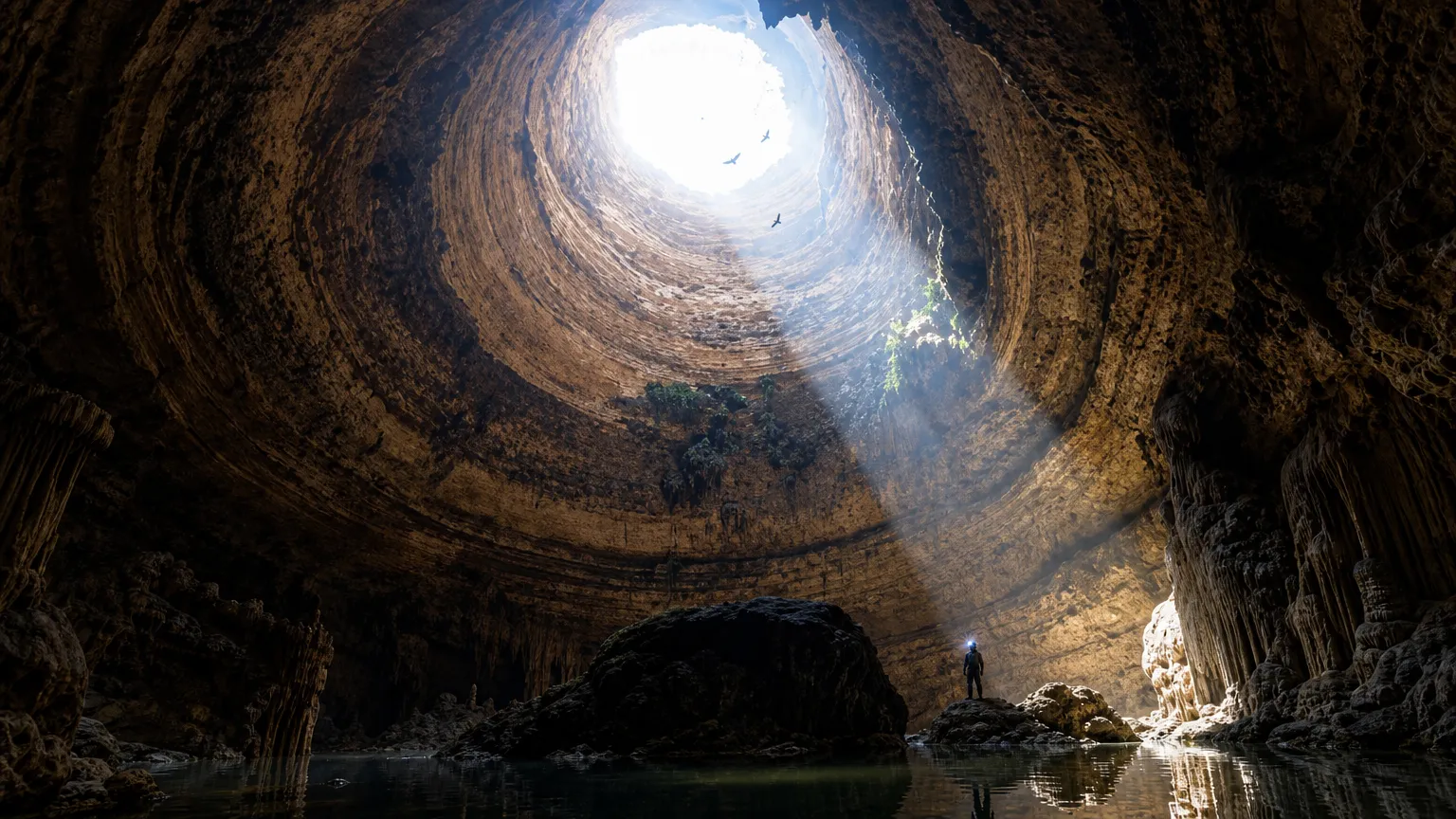
What local tradition says, and what it reveals
The association between the Well of Barhout and trapped spirits is not just local superstition: it is a layer of cultural data with real informational value.
Oral traditions that last for generations often encode empirical observations about the natural world in symbolic language. A community that for centuries avoided a hole in the desert and linked it to a "prison" and to dangerous beings was passing down, from one generation to the next, a single piece of information: don't go there.
That information may come from one or more kinds of observation: animals that fall in and die (adding to its dangerous reputation), sounds coming from the well (wind moving through caves produces sounds that, in cultures without a geological explanation, become the voices of spirits), or gases that cause dizziness or sickness in anyone who gets too close without protection.
What locals called the "prison of the jinn" may be, in geological terms, an enclosed chamber with a high concentration of CO2, an odorless gas that causes severe disorientation at concentrations above 5% and can be fatal within minutes above 10%. That would explain why people who "went down" in local stories supposedly died or came back disturbed.
The 2021 expedition used oxygen equipment (a standard precaution in caving), but did not measure gas concentrations at the bottom.
What we still don't know
The Well of Barhout remains only partly explored. The questions the 2021 expedition left unanswered:
What is its total depth? Are there more chambers below the 112 meters explored? What is the composition of the air at the bottom? Which snake species were found: are they known, or potentially new to science? Is there an underground connection to other cave systems in the region?
The active conflict in Yemen (the Yemeni civil war that began in 2015 remains unresolved at the time of publication) makes scientific research expeditions immensely difficult. Al-Mahra, although relatively less affected by the fighting than other regions, is still a hard area for international teams to reach.
The Well of Barhout may hold partly unique cave fauna, remarkable geological formations and, possibly, archaeological remains, if human groups used the cave system in the past. It is the same kind of untapped potential that exists in Derinkuyu, where less than 5% of the 200 underground systems identified in Cappadocia have been fully explored, and in Dwarka, where difficult diving conditions prevent complete mapping of the gulf floor.
Or it may simply be a very deep hole in Yemeni limestone, its reputation fully explained by accidents piling up over centuries and by the frightening depth visible from the rim.
Telling these possibilities apart will take an expedition with more time, more equipment and a security situation that allows it to happen.
Yemen holds other mysteries besides the Well of Barhout: the island of Socotra, with plants and animals found nowhere else on Earth, is another example of how hard-to-reach regions preserve the unknown. For other places whose full exploration awaits safer conditions, read about Nan Madol, threatened by climate change before it could be fully studied, and about Dwarka, where the clash between scientific verification and oral tradition remains unresolved. For another hole in the ground with a long history of mystery, see Derinkuyu, the city that took centuries to be discovered beneath an ordinary house.