Dwarka: the city the Mahabharata says sank, and what archaeology found in the sea
The epic says the ocean swallowed Krishna's city. Off the coast of Gujarat there are real submerged ruins, and a far older find that scientists met with skepticism.
- When
- c. 1500–600 BC
- Where
- Dwarka and Gulf of Khambhat, Gujarat, India
- Status
- Under debate competing explanations, no consensus
By The Echoes of the Past team. Published November 2, 2026. 6 min read.
The Mahabharata is one of humanity's great epic texts: with more than 100,000 verses, it is seven times longer than the Iliad and the Odyssey combined. In one of its most melancholy episodes, it describes the sinking of Dwarka, the golden city built by the god Krishna on the shore of the sea:
"The ocean flooded Dwarka soon after Krishna's departure. Everything that was there was swallowed by the ocean. No trace of Dwarka remains."
For millennia, this passage was read as mythology. Then, in 2001, researchers from India's National Institute of Ocean Technology were carrying out seismic surveys in the Gulf of Khambhat, off the coast of Gujarat, when their equipment picked up something unexpected on the seabed. The link between that find and the Dwarka of the epic, however, is a hypothesis, as we will see.
What was found at the bottom of the Gulf of Khambhat
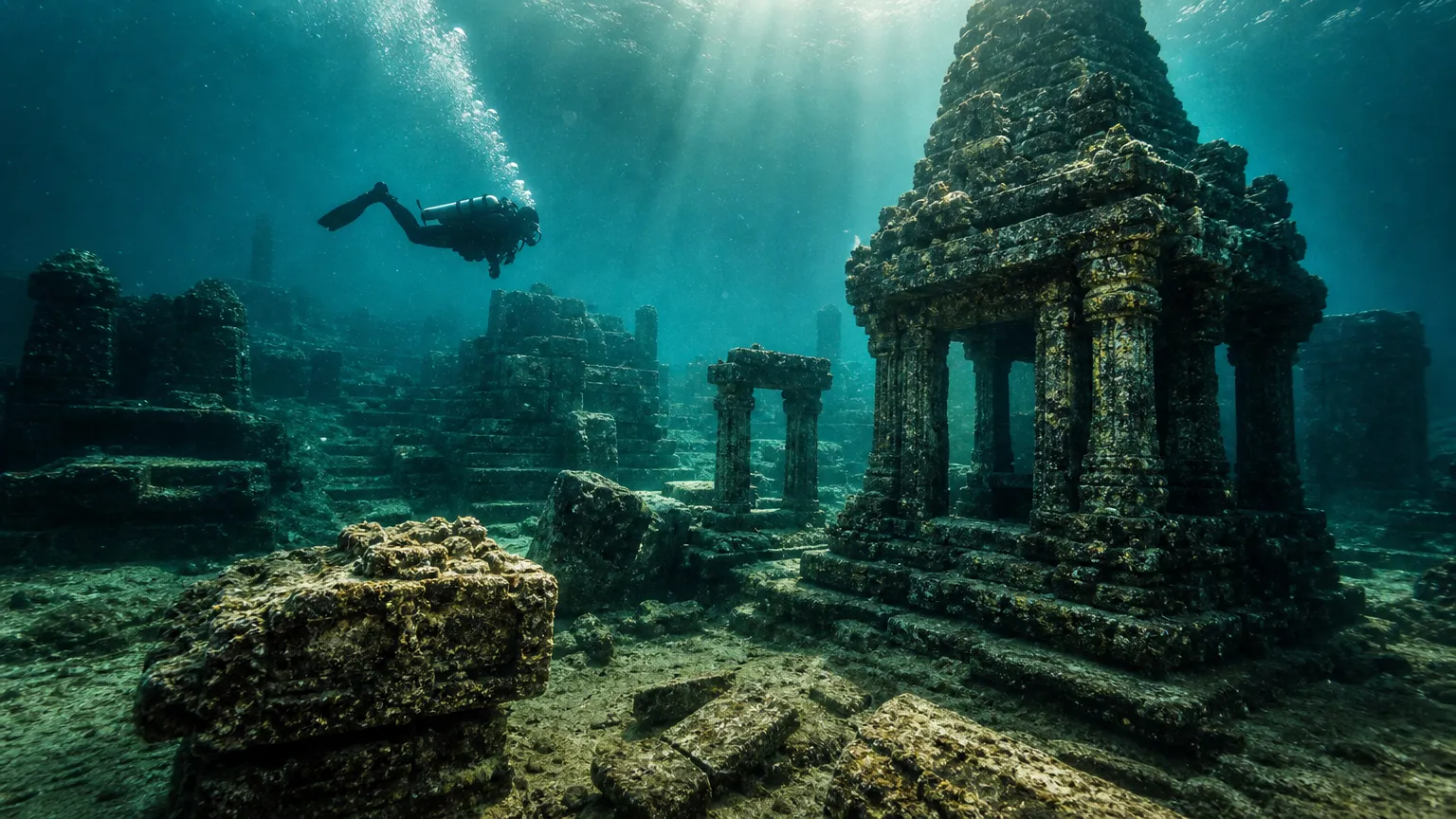
The 2001 seismic scans revealed regular structures about 40 meters deep in the Gulf of Khambhat, an area that, during the last period of low sea level (between 10,000 and 8,000 years ago), was dry land.
The structures showed geometric patterns that the Indian researchers described as possible signs of human construction: what looked like walls, columns, paving. The area covered was considerable; early estimates spoke of several square kilometers.
Sediment samples collected at the site included fragments that were sent for radiocarbon dating. The results, announced in 2002 by India's then minister of science and technology, were extraordinary: some samples dated to about 9,500 years ago.
If confirmed, that would place a civilization building structures in Gujarat more than 4,000 years before the Indus Valley Civilization, the oldest known urban civilization on the Indian subcontinent.
The verification problem
This is where scientific caution becomes essential.
The 2001 discoveries were controversial from the start, for serious methodological reasons.
First, the samples collected from the seabed did not come from inside the structures: they came from sediment around them. Dating sediment is not the same as dating built structures. Ancient organic material can accumulate at any submerged site with no connection to human activity.
Second, the analysis of the seismic images was challenged by geologists who argue that the "geometric" shapes observed may be natural rock formations: erosion, geological faults, sediment deposition. Without excavation and direct examination, it is impossible to tell.
Third, diving conditions in the Gulf of Khambhat are extremely difficult: near-zero visibility because of suspended sediment, strong currents, considerable depth. Later diving expeditions struggled to obtain images clear enough for analysis.
The international archaeological community received the announcement with considerable skepticism. The Archaeological Survey of India, the country's main archaeological authority, did not endorse the broader conclusions about the age and nature of the structures.
Historical Dwarka: what archaeology confirms
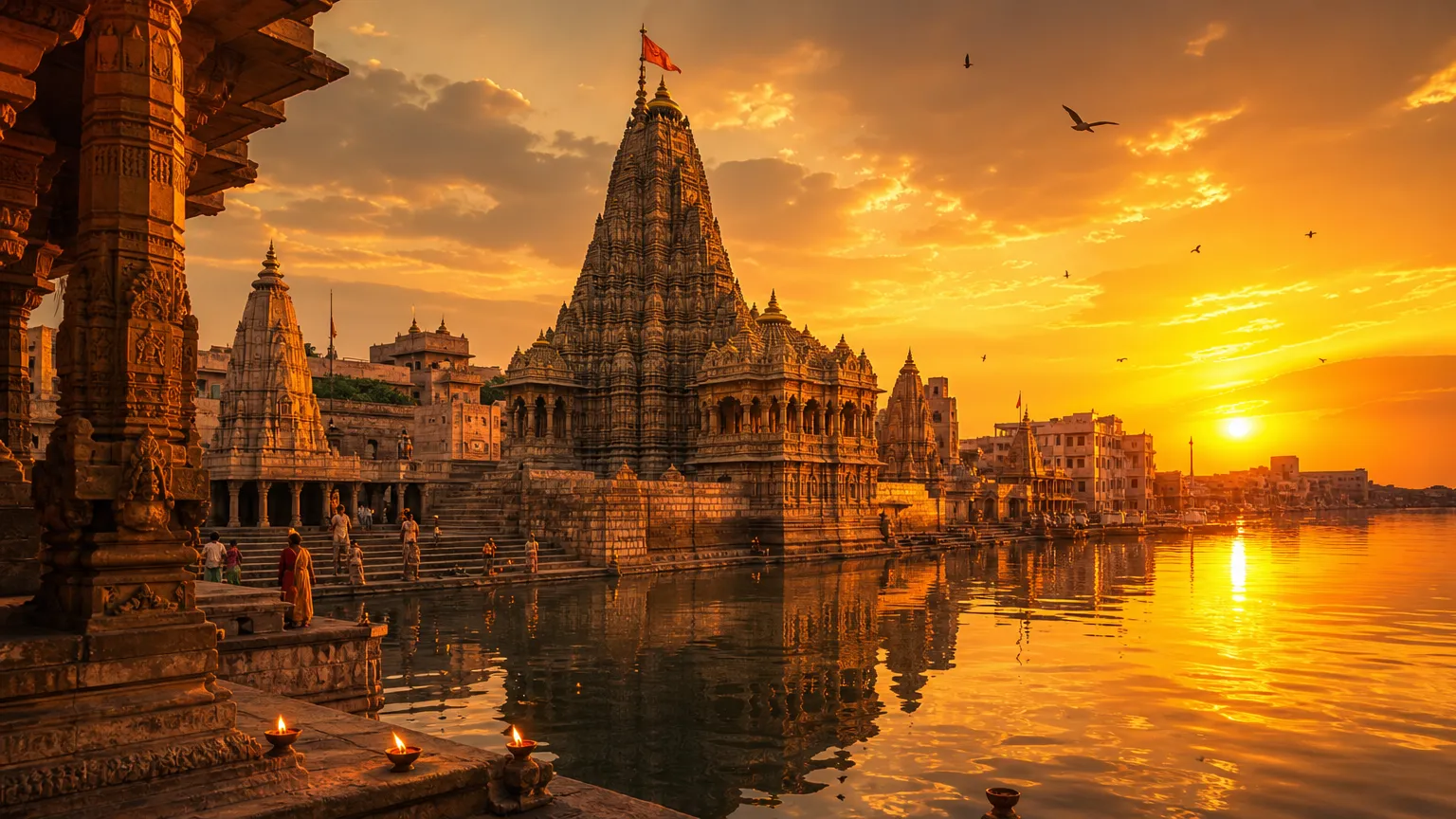
Apart from the Gulf of Khambhat question, there is a historical Dwarka whose evidence is solid and impressive.
The present-day city of Dwarka, in Gujarat, was the focus of multiple underwater archaeology campaigns led by S.R. Rao, of the National Institute of Oceanography, between 1983 and 1992. Those excavations found submerged structures a few meters deep, right off the city's coast, which, according to Rao's dating, range from about 1500 BC to 600 BC.
The finds include stone anchors, pottery identifiable as belonging to that period and what archaeologists interpreted as the foundations of buildings flooded by the gradual advance of the sea. This is consistent with the historical occupation of the region and with the sea-level fluctuations documented in the Gulf of Khambhat.
This historical Dwarka, and not the 9,500-year-old one, is archaeologically verified and corresponds reasonably well to the period in which texts like the Mahabharata were composed, or to the oral traditions that preceded them.
The question is: is this the Dwarka of the epic? Or does the text preserve a much older memory, of a far more dramatic flood?
The memory of the flood
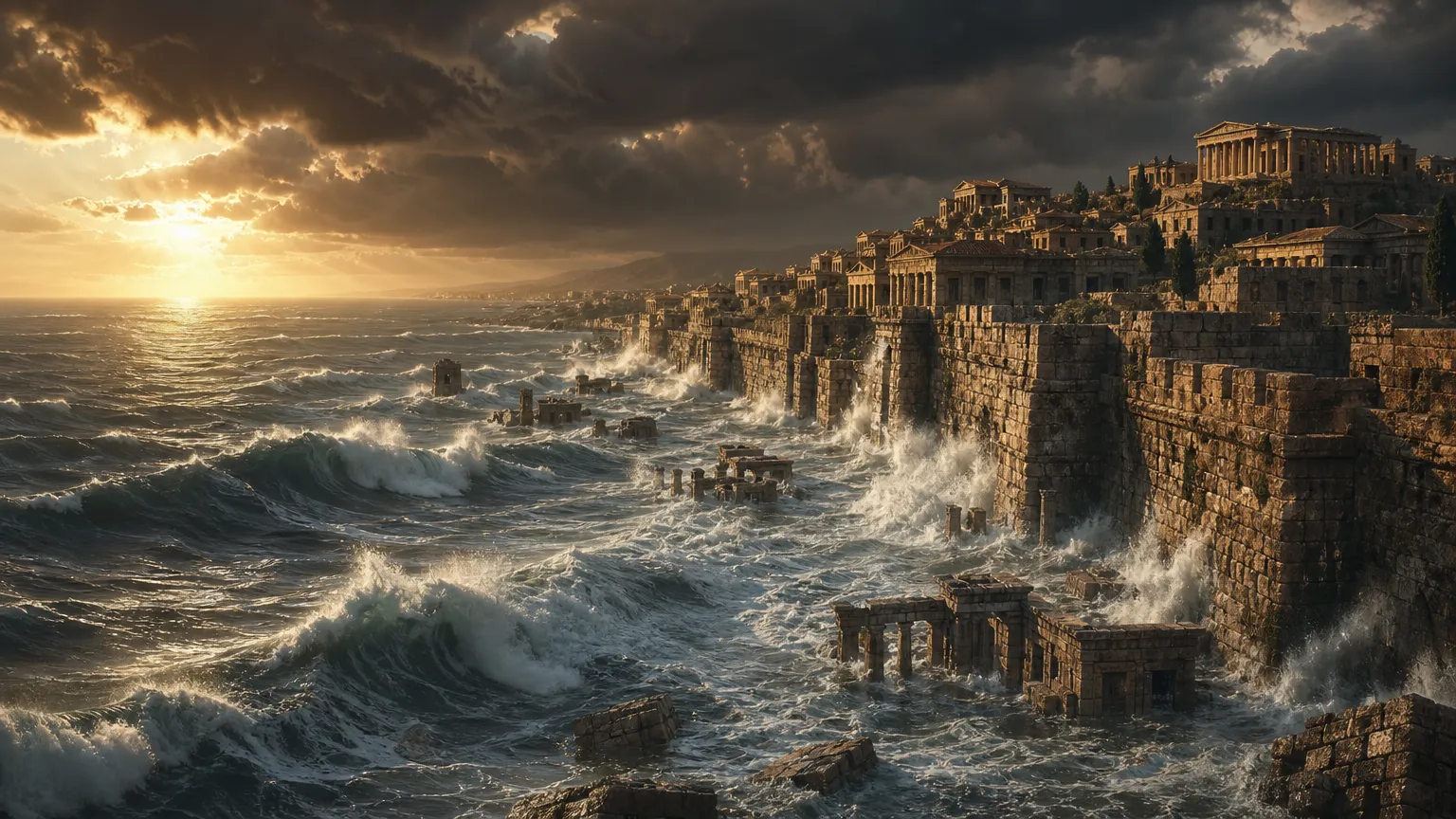
The flood myth (a city or civilization destroyed by the advancing sea) appears in practically every culture that lived in coastal regions. From the biblical flood to Plato's Atlantis, from the Greek legend of Helike to the Lemuria of Tamil traditions.
Geology explains part of it. The end of the last ice age, between 12,000 and 8,000 years ago, brought a sea-level rise of about 120 meters, which flooded vast stretches of inhabited coastline around the world. It was this same process that turned the peninsula where Queimada Grande Island now lies into an isolated island, cutting its snakes off from the mainland for good. Communities living on those coasts may have passed down memories of the event (the disappearance of familiar land beneath the water) orally, over generations, until they hardened into flood myths.
The Gulf of Khambhat, in particular, is a region where the sea's advance after the ice age was especially dramatic. Because the gulf's continental shelf is shallow, a small drop in sea level exposes huge areas, and an equivalent rise floods them.
If there were human populations on those coasts 8,000 to 10,000 years ago (and there were, as evidence from Paleolithic sites in India confirms), they watched the sea advance over their land. The question the 2001 discoveries raise, without yet answering it definitively, is: did those populations build permanent structures?
What is missing for a definitive answer
The Dwarka question is not closed. It is the same kind of inconclusiveness that marks the Nazca Lines, in Peru, where the construction technique is understood but the deeper purpose remains open. What is needed for a definitive answer:
- Systematic excavation of the floor of the Gulf of Khambhat with suitable technology: remotely operated equipment capable of working in low visibility. That requires funding and permits that have not yet been fully secured.
- Direct dating of building materials: not of the surrounding sediment, but of the stone or mortar of the structures themselves, if they are confirmed to be artificial.
- Publication of the full data in peer-reviewed scientific journals, something the 2001 discoveries never received in any comprehensive way, which in itself is a problem for their scientific acceptance.
Meanwhile, Dwarka remains in a peculiar position: more than a myth, less than a certainty. The city of the epic may lie at the bottom of the gulf, a hypothesis that currently lacks the backing of academic archaeology. It may be the historical Dwarka of 1500 BC. It may be both: overlapping memories of different floods, different losses, different civilizations swallowed by the same ocean.
Cities lost beneath the waves appear in traditions around the world. Read also about Nan Madol, the city built on the ocean that the world forgot for centuries. In Japan, the submerged structures of Yonaguni are caught in the same debate, just as heated, between natural formation and human construction. For a temple that was buried rather than submerged, see Göbekli Tepe. And for another mystery science is still trying to close, see the Tunguska event.