Nan Madol: the city built on the ocean that the world forgot for centuries
Walls up to 7.5 meters high, with no mortar, on artificial islets in the middle of the Pacific. The dynasty that built them fell in 1628; where part of the stone came from is still unknown.
- When
- c. 1100–1628
- Where
- Nan Madol, Pohnpei, Micronesia
- Status
- Partly explained the main explanation is accepted; details remain open
By The Echoes of the Past team. Published November 2, 2026. 4 min read.
If you look at a map of the Pacific Ocean and search for Pohnpei, you will find a tiny speck of land surrounded by a vast blue expanse, more than 2,500 kilometers from the Philippines and more than 3,000 kilometers from Japan.
On the east coast of that island, there is a city.
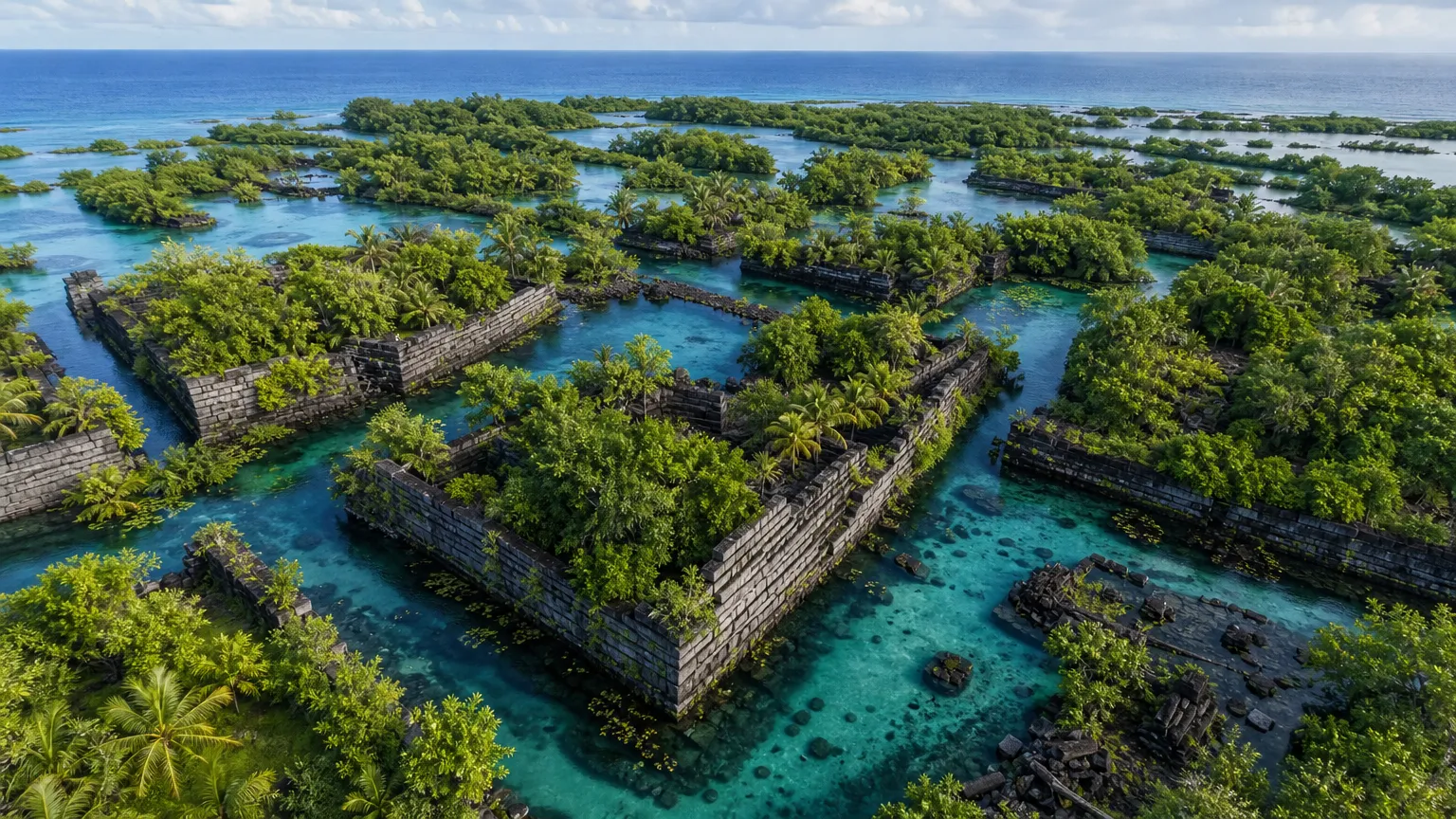
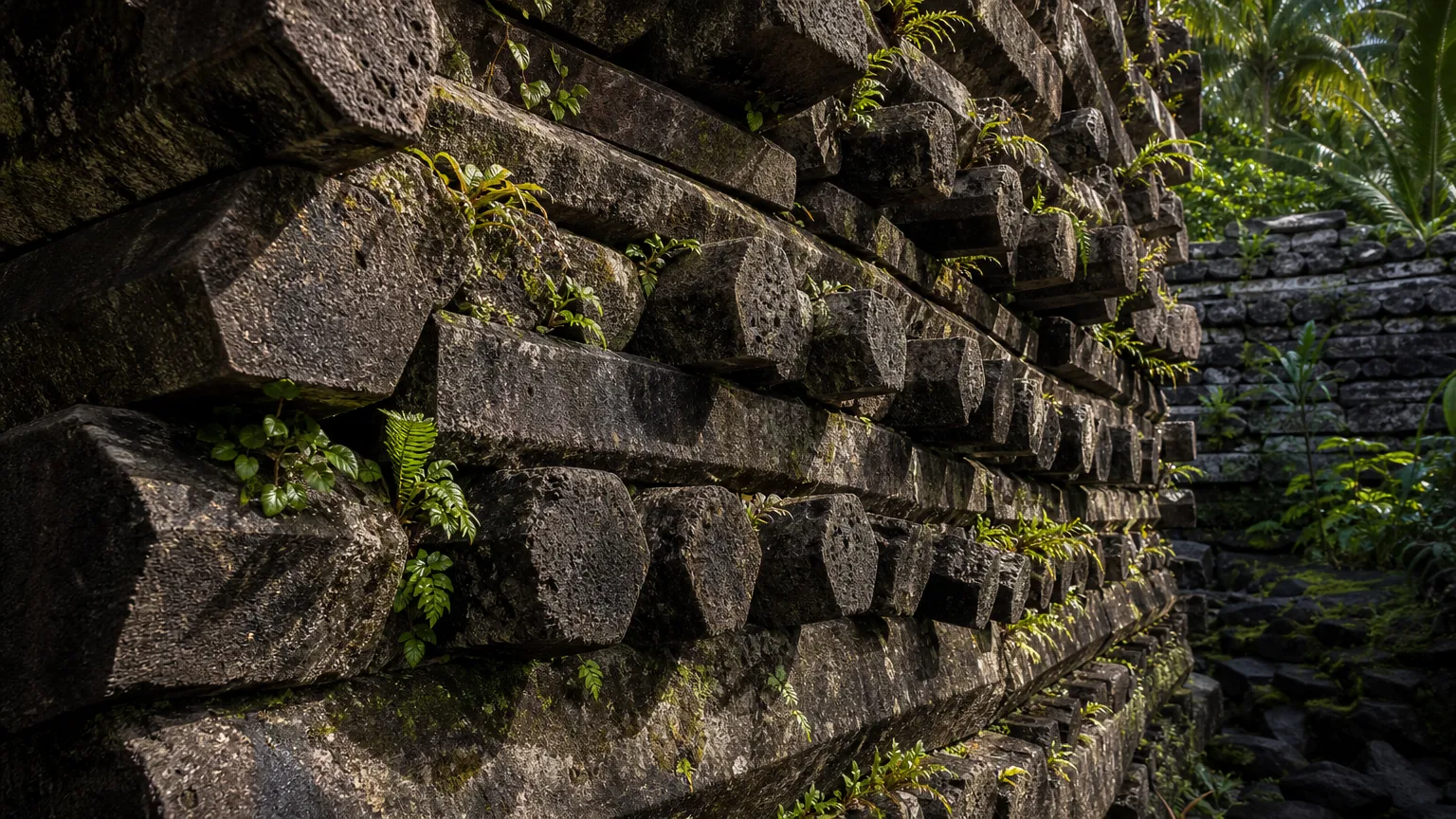
Not the traces of a city. A city with walls, canals, artificial islands, courtyards and structures that rise up to seven meters above sea level. Built with hexagonal basalt stones weighing up to 50 tonnes each. Covering 18 square kilometers.
Its name is Nan Madol. A UNESCO World Heritage Site since 2016. And the most basic question about it, where the 250,000 tonnes of stone used to build it came from, still has no complete answer.
The city of the spaces between
In the Pohnpeian language, "Nan Madol" means "spaces between," a reference to the canals that separate the complex's 92 artificial islands. It is literally a city on the ocean, with each island resting on fill of coral and basalt and linked to the others by canals navigable by canoe.
The complex was built by the Saudeleur dynasty, which ruled Pohnpei from about AD 1100 to 1628. The islands served different purposes: elite residences, temples, kitchens, the raising of sacred turtles, food storage.
The central island, Nan Douwas, is the most imposing: outer walls reaching 7.5 meters high and 3 meters thick, built from basalt columns laid in an alternating horizontal-vertical pattern, with no mortar, which have stood stable for centuries.
The problem of the stones
The columnar basalt used in the construction exists on Pohnpei. But geochemical studies comparing the composition of Nan Madol's stones with known quarries on the island found only partial matches. Some stones have geochemical signatures that match no identified local source.
Pohnpeian oral tradition solves the problem elegantly: two magician brothers named Olisihpa and Olosohpa, who came from a distant land, lifted the stones through the air by sorcery. Archaeologists do not work with sorcery, but they recognize that the legend captures the sense that the feat seemed impossible to those who came later.
Scientific hypotheses include underwater quarries covered by rising seas, sources on neighboring islands with stones carried by raft and, quite simply, land quarries that have not yet been identified. None has been ruled out. None has been definitively confirmed.
The fall and the abandonment
Around 1628, the Saudeleur dynasty was overthrown by Isokelekel, an invader who arrived with 333 warriors, according to oral tradition. After the fall, Nan Madol was gradually abandoned.
Pohnpei's tropical jungle, in one of the rainiest regions on the planet, with up to 7,600 mm of rain a year, quickly covered the structures. When the first Europeans heard reports of the city in the Pacific, many doubted it existed. The Russian navigator Johann von Krusenstern documented it in 1804. It would take decades for later expeditions to confirm its existence and its scale.
Systematic excavations in the 1970s and 1980s revealed a monumental tomb on Nan Douwas (probably the burial place of the Saudeleur rulers), glass beads imported from Southeast Asia, evidence of long-distance trade, and pottery fragments from different regions of the Pacific.
The threat today
Today Nan Madol faces an enemy no basalt wall can hold back: rising sea levels.
The city already sits at ocean level. Higher tides flood parts of the complex more and more often. Structures that survived centuries of jungle and abandonment are being eroded by salt and by stronger tides.
UNESCO and the government of Micronesia are working on conservation plans, with limited resources for an immense challenge. There is a cruel irony here: Nan Madol survived the collapse of its own empire, centuries of abandonment and the arrival of Europeans, and it may be destroyed by climate change before archaeology finishes uncovering its secrets.

What Nan Madol represents
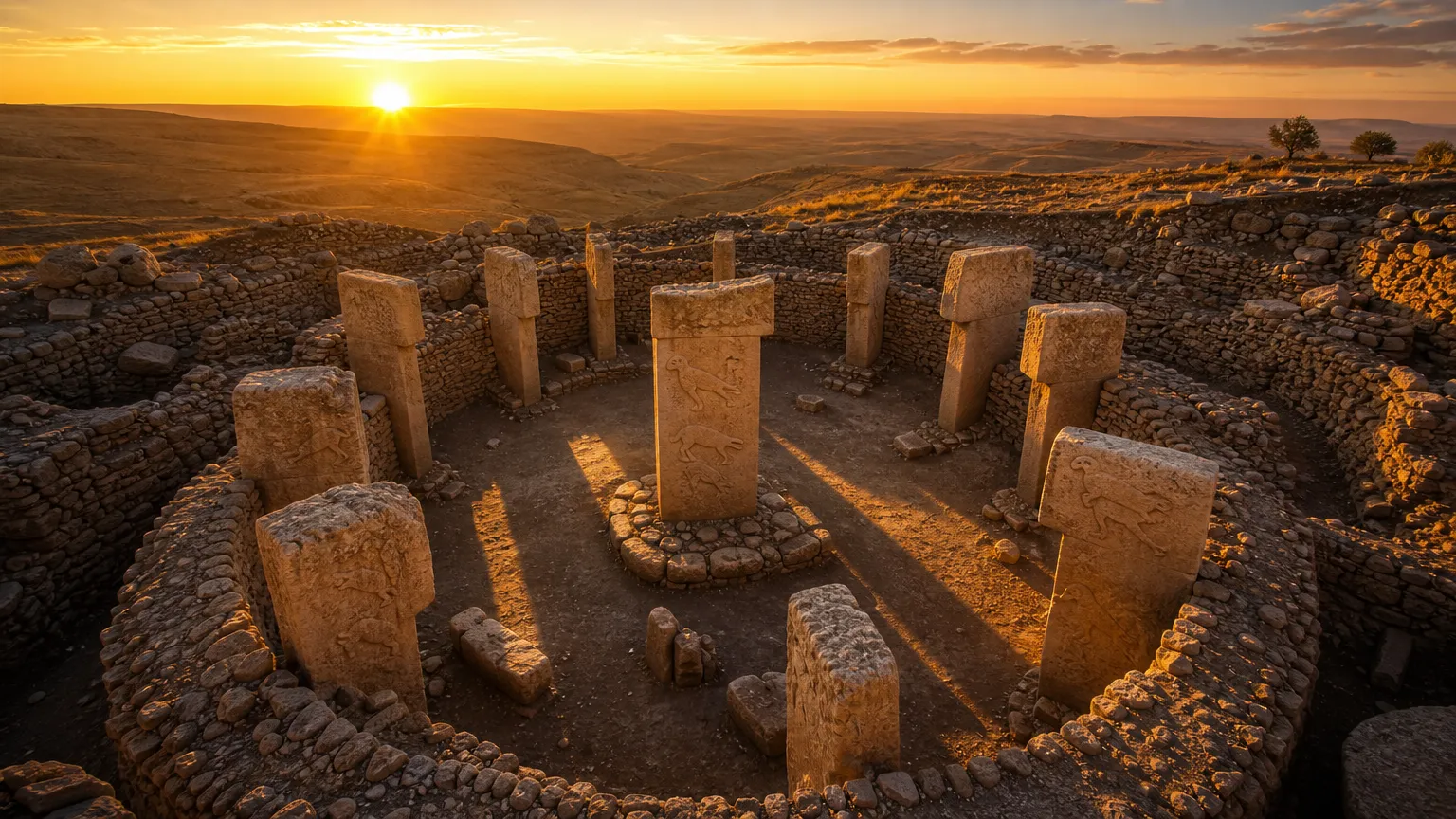
Nan Madol is proof that complex civilizations with monumental capacity existed in places that the Eurocentric historical narrative ignored. The same holds for Göbekli Tepe, in Turkey, a 12,000-year-old temple built by hunter-gatherers whom the textbooks considered incapable of such organization, and for the Great Pyramid of Giza, whose cavities, recently detected by muon scanners, show that even the most studied monuments still hold secrets. The Pacific was not a void between the "great civilizations": it was an ocean inhabited by peoples with sophisticated navigation systems, political organization and building capacity.
The city on the ocean is the most visible echo of that reality. And it still holds questions no one has answered.
For other cities whose origins defy explanation, read about Dwarka, the so-called "Indian Atlantis", about Sacsayhuamán, in Peru, where 300-tonne blocks were fitted together with a precision that withstands earthquakes, and about Göbekli Tepe. For a mystery just as well documented and just as unexplained, see the Wow! signal.