Nikola Tesla: the experiments the US government seized and what really happened to his papers
The inventor who helped electrify the world died poor in a hotel room. What the released documents say about the teleforce ray and his final projects.
- When
- January 1943
- Where
- Hotel New Yorker, Manhattan, New York, United States
- Status
- Partly explained the main explanation is accepted; details remain open
By The Echoes of the Past team. Published November 2, 2026. 5 min read.
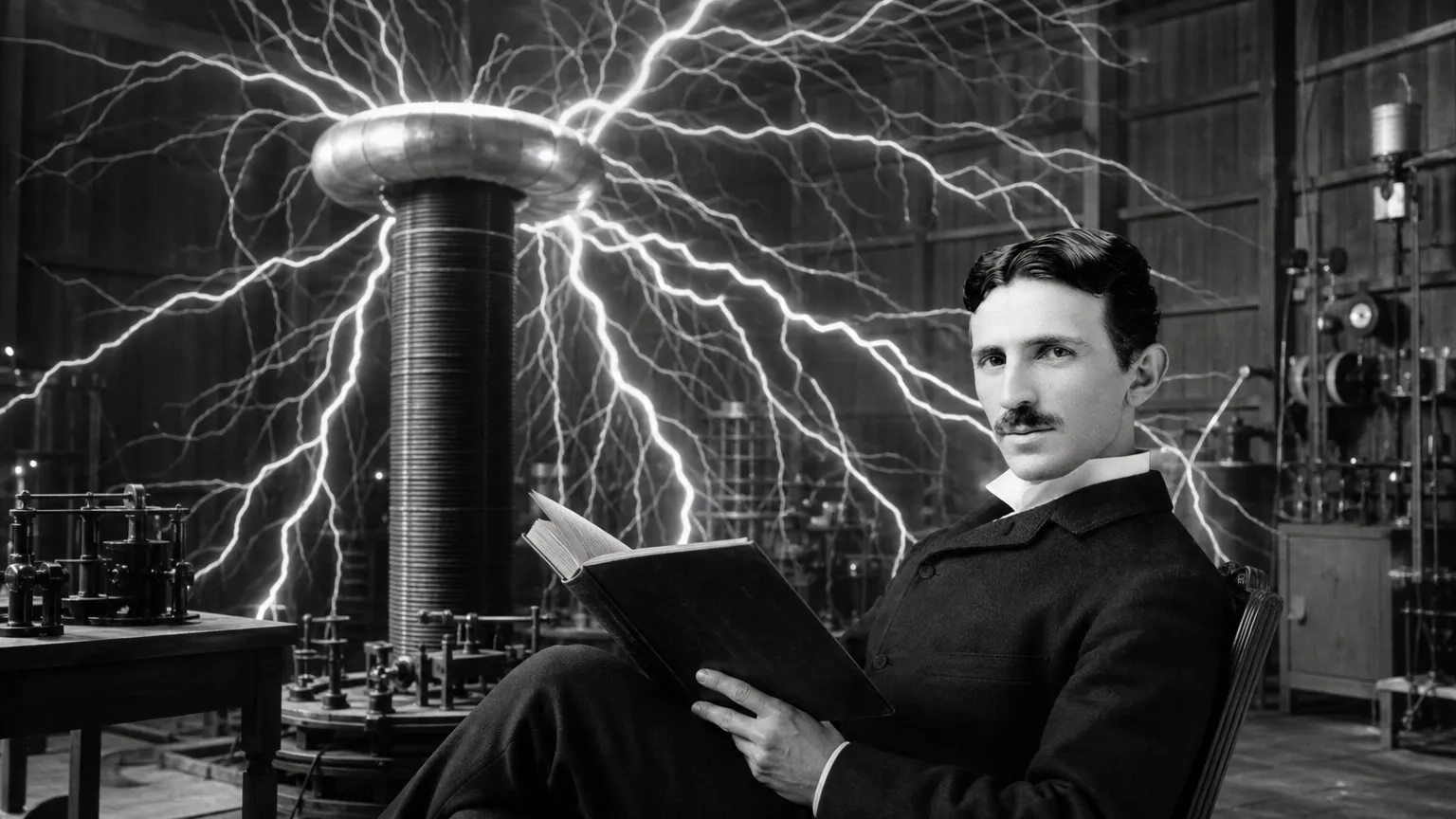
On the morning of January 8, 1943, Nikola Tesla's body was found in room 3327 of the Hotel New Yorker in Manhattan. He was 86 and had died during the night, alone and in poverty. This was the same man who had lit up the 1893 World's Fair in Chicago, who had invented the alternating current motor and who had created the electrical transmission system we still use today.
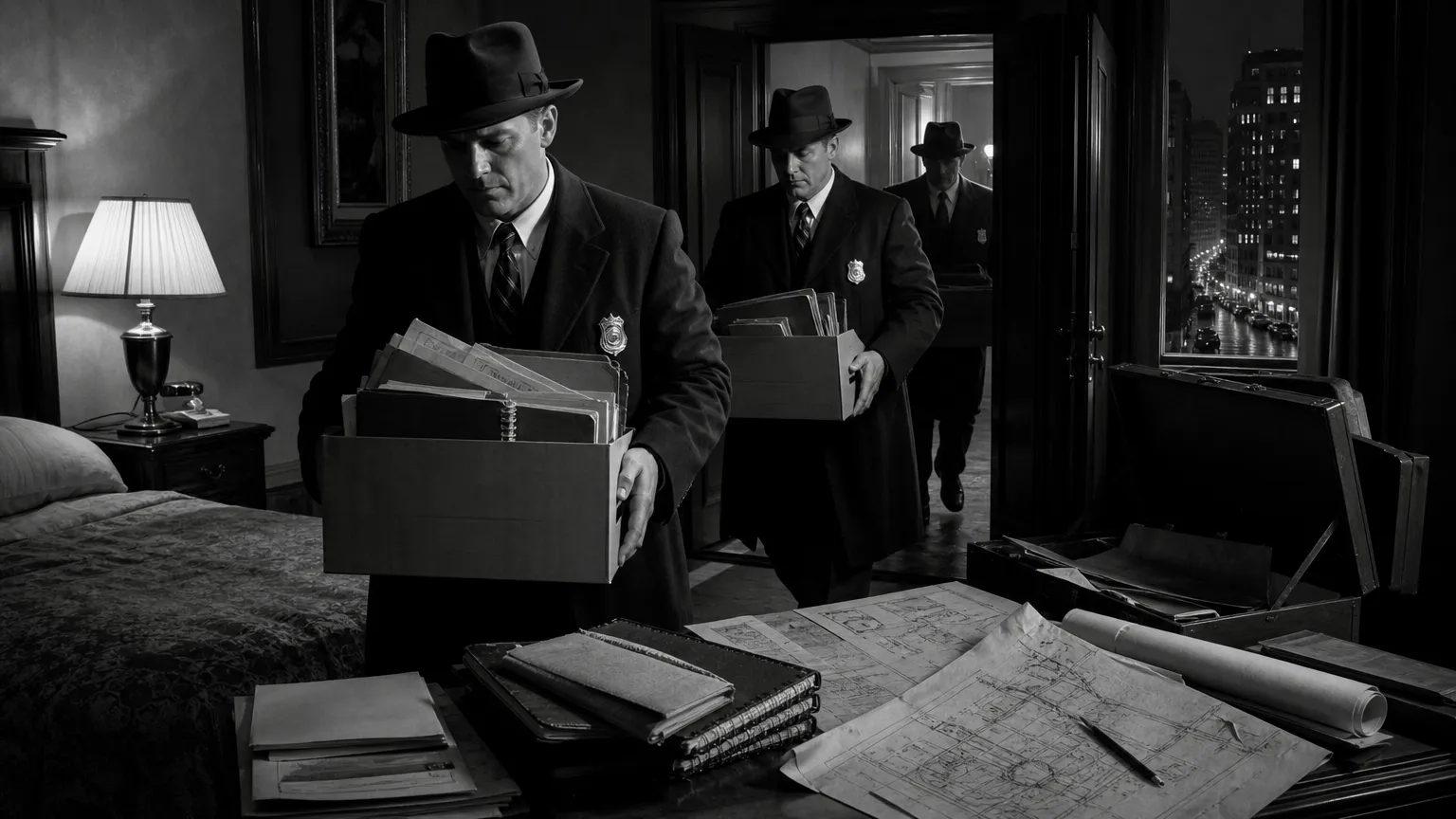
Two hours after the body was discovered, agents from the US Office of Alien Property arrived at the hotel and seized all of his belongings: papers, notebooks, diaries, equipment models, correspondence.
Tesla had been a naturalized American citizen since 1891. But he had been born to a Serbian family in Smiljan, in present-day Croatia, then part of the Austrian Empire. In 1943, in the middle of World War II, "alien" was enough to justify the action.
The papers were held in government custody. Some were eventually returned to his family and later donated to the Tesla Museum in Belgrade. Others were analyzed by MIT at the government's request. Others remained in archives for decades.
What was in them?
What Tesla was working on at the end of his life
Tesla spent his last years in steadily worsening conditions: without funding, in debt to his hotel, working on projects he could no longer develop for lack of resources. It is a trajectory with disturbing echoes of Nicolas Flamel's, another man who claimed transformative knowledge, came into inexplicable resources at one point and left a final record that does not quite add up.
But he kept working.
In the 1930s, Tesla made several public statements about a "teleforce ray," a particle weapon capable of bringing down aircraft hundreds of kilometers away and of creating a defensive "wall of force" around entire countries. He sent technical descriptions to several governments, including the United States, the United Kingdom, the Soviet Union and Yugoslavia.
Most of the copies he sent were analyzed and deemed unworkable by the military scientists of the time. The MIT report, prepared after the papers were seized in 1943, concluded that the descriptions of the teleforce ray were incomplete and that the principles presented would not work as Tesla described.
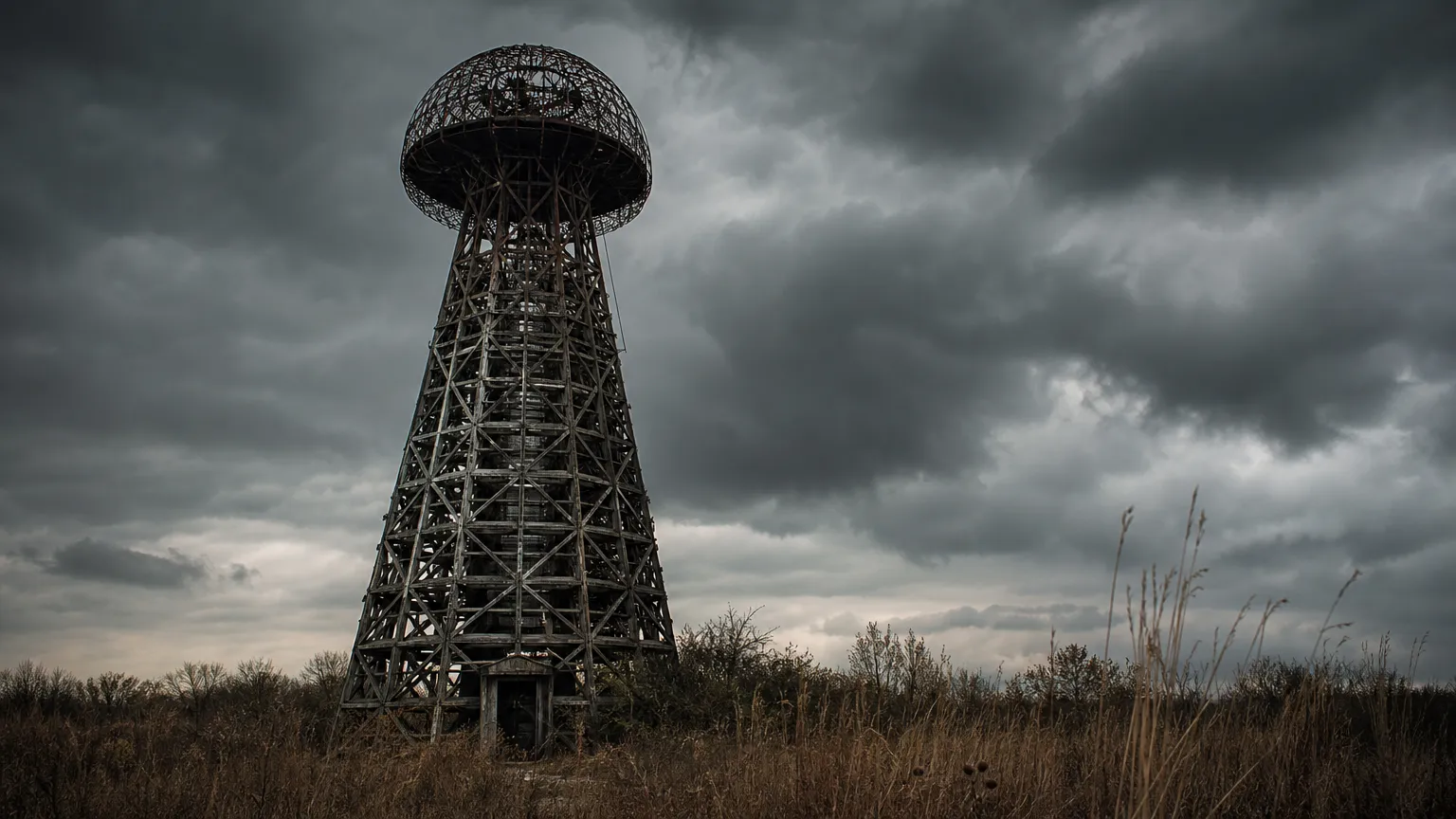
Tesla was also working on what he called a "world power system": wireless transmission of electricity through the ionosphere, using the Earth itself as a conductor. Wardenclyffe Tower, his most ambitious project in that direction, had been demolished in 1917, after his backer J.P. Morgan withdrew his support.
What the declassified documents reveal
A significant portion of the Tesla documents was declassified by the FBI in the decades that followed and is now available in the FBI's digital archive (vault.fbi.gov). The analysis of these documents by researchers and historians of science reveals a picture that differs from the popular narrative.
What the documents show: Tesla was genuinely brilliant, he had ideas decades ahead of his time in several fields (wireless transmission, radar, robotics) and, in his last years, he produced work that was a mix of real insights and incomplete or mistaken concepts.
The teleforce ray, in particular, is described in the documents vaguely enough that it cannot be reproduced, and the physical concepts involved have problems that physicists have identified. This is consistent with what happens to many great inventors late in life: the ideas persist, but the resources and the critical colleagues who once refined them are gone.
It is tempting to compare the wireless transmission Tesla dreamed of with the Wow! signal of 1977: both involve energy traveling through empty space, and both remain, each in its own way, without confirmed replication.
What the documents do not show: evidence that Tesla had working revolutionary technology that was deliberately suppressed. The seizure was real. The concern that Tesla's papers might fall into enemy hands during the war was legitimate. But what was found was not what "free energy" enthusiasts imagined for decades.
What Tesla really left behind
Tesla's true legacy needs no mystery to be extraordinary.
The alternating current induction motor he patented in 1888 is the basis of the electrical transmission system that powers the world today. The polyphase distribution system that he and Westinghouse put in place at Niagara Falls in 1895 showed that electricity could be transmitted efficiently over long distances, decisively defeating Edison's direct current system.
His radio patents, originally credited to Marconi, were reversed by the US Supreme Court in 1943, the same year he died, recognizing his priority.
He worked with X-rays before Röntgen. He described principles of radar years before radar was developed. He proposed wireless communication concepts that foreshadowed radio and the cell phone.
The Tesla myth (the genius suppressed by the establishment, with secrets buried in FBI files) is, in a way, a disservice to the real Tesla. The real Tesla does not need invented secrets. What he accomplished, documented and verifiable, is impressive enough to justify any amount of admiration.
What the mystery surrounding his seized papers captures, perhaps, is the legitimate resentment of someone who died in poverty after transforming the world, while others profited from his work. That is a real, documented historical injustice, and it needs no conspiracies to be disturbing.
Tesla was not the only inventor whose work was appropriated or suppressed in ways that history recorded only partially. For other figures who held knowledge that others wanted and no one could verify, read about Cagliostro and about the Count of Saint-Germain. For an event where technology and government secrecy crossed paths in documented ways, see the Battle of Los Angeles of 1942.