Nicolas Flamel: the medieval scribe who grew too rich and left a testament no one can explain
According to legend, he turned mercury into gold in 1382. The documents confirm another part of the story: a scribe who bought property and funded religious works.
- When
- 14th and 15th centuries
- Where
- Paris, France
- Status
- Partly explained the main explanation is accepted; details remain open
By The Echoes of the Past team. Published November 2, 2026. 3 min read.
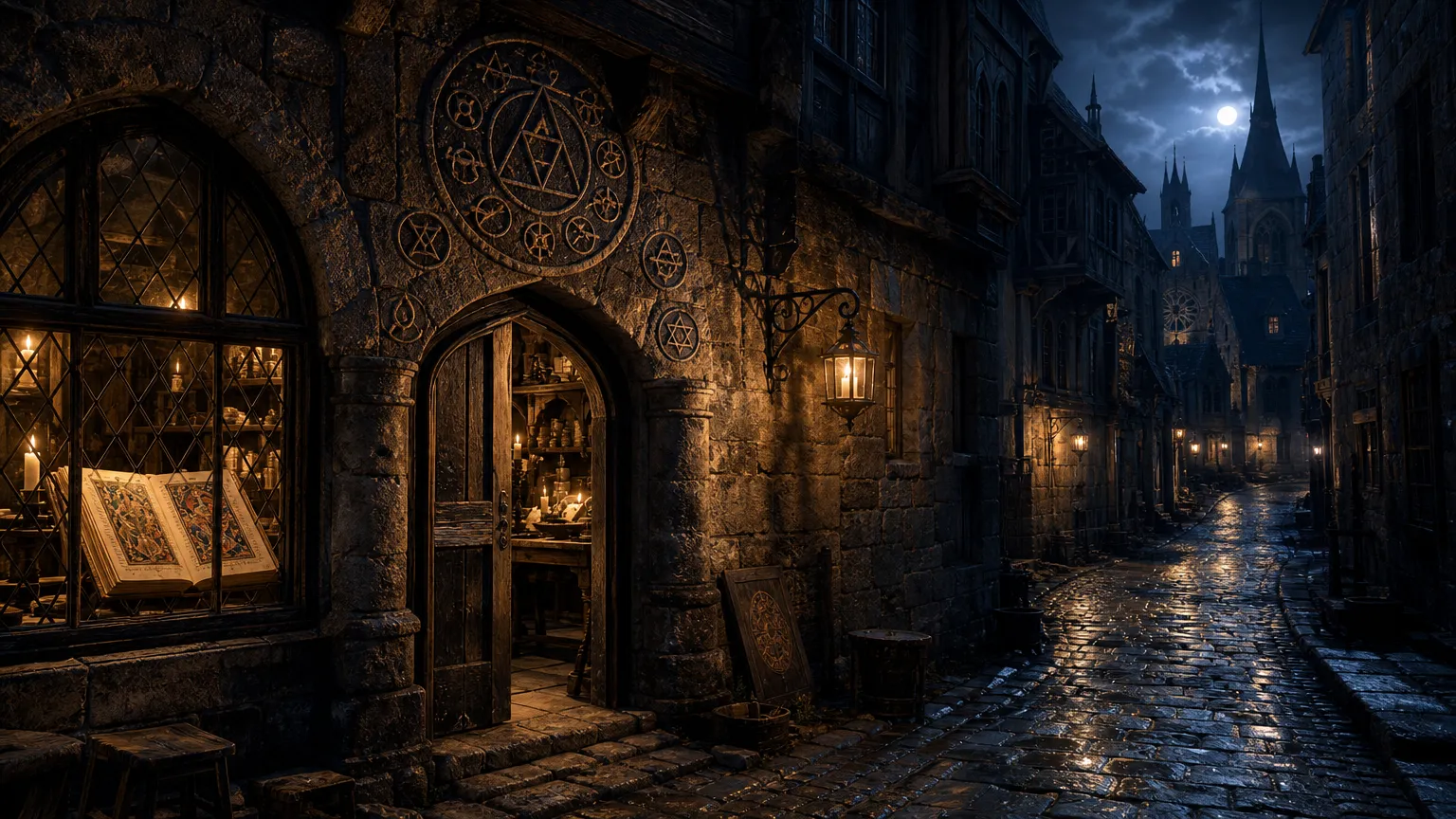
By all the evidence available about his early life, Nicolas Flamel was a scribe in Paris. It is as unlikely a background for a supposed alchemist as that of Rasputin, a Siberian peasant with no formal education who became the most feared man in Russia and the one closest to the throne. Flamel worked at copying and selling books at a time when that was an honorable but modest trade. He married a widow named Perenelle, who owned some property, and lived a reasonably comfortable middle-class life in 14th-century Paris.
Then, according to the tradition that grew up around him, something changed.
In 1382, according to the account attributed to him and published after his death, Flamel supposedly completed the alchemical Great Work: the transmutation of mercury into silver, and then into gold.
What is not legend: in the years that followed, Nicolas Flamel funded the construction and restoration of fourteen hospitals, three chapels, and seven churches in Paris and Pontoise. The financial records exist. The money was real.
The question is where it came from.
What the historical records confirm
Nicolas Flamel is a real historical figure, documented in 14th-century Parisian records. He bought property. He funded religious works. His name appears in notarial documents.
He and Perenelle died (she in 1397, he in 1418) and were buried in the Church of Saint-Jacques-de-la-Boucherie in Paris, of which only the tower, the Tour Saint-Jacques, still stands.
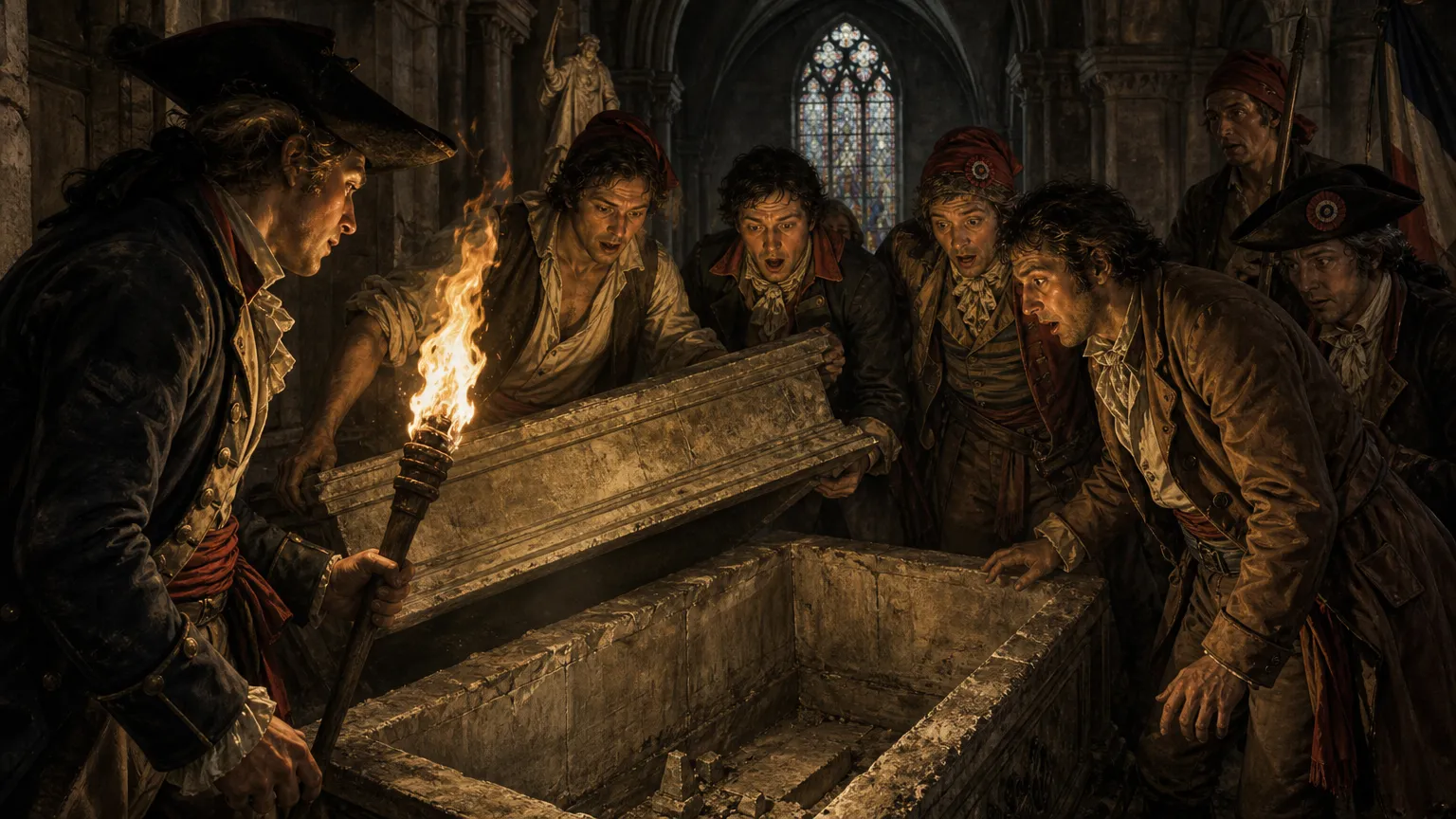
According to the accounts, their tombs were broken open during the French Revolution by people who believed the bodies held alchemical secrets, and they were found empty. An absence of evidence as baffling as the one we found at the Well of Barhout, where 112 meters of exploration answered fewer questions than they raised.
That could mean many things: that the bodies had been moved at some earlier point, that the tombs were cenotaphs (monuments with no body), that someone had removed the remains for religious or superstitious reasons, or, in the version the alchemical tradition prefers, that Flamel and Perenelle were not there because they had never died.
The manuscript that changed everything
In the same account attributed to him, Flamel tells how he bought, for two florins, an old book with copper covers, full of text and figures he could not understand. He spent years trying to decipher it, traveled to Spain to seek the help of Jewish scholars, and eventually, with the help of a master named Canches, grasped the alchemical secrets the book contained.
That book, identified in the tradition as the "Book of Abraham the Jew," has never been found. It may never have existed. It may have been a metaphor for a learning process that Flamel described allegorically.
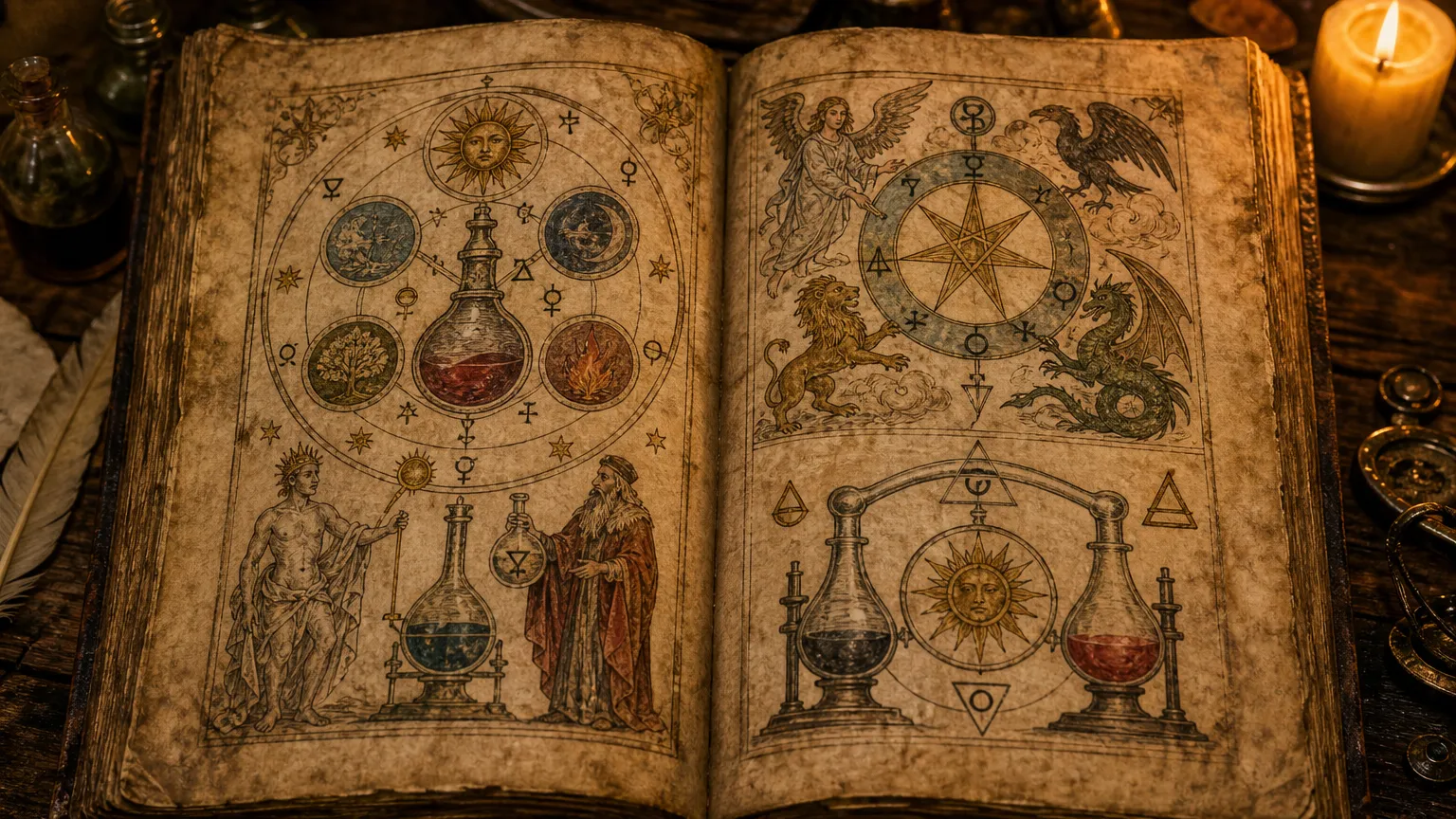
But the money that appeared afterward was real. Fourteen hospitals is a considerable amount of philanthropy for a scribe.
The mundane explanations include Perenelle's inheritance (she was a widow with property), successful real estate speculation in Paris, and simply the gradual accumulation of decades of honest work. These explanations are plausible, but modern historical research has not yet documented them in a way that settles the question.
Nicolas Flamel remains on the border between verifiable historical figure and alchemical legend. And that border is exactly where the most enduring stories live.
For other alchemists whose truth is hard to separate from legend, read about Cagliostro and the Count of Saint-Germain. For another man whose transformative knowledge, real and documented, was ignored in his lifetime, see Nikola Tesla.