The Man in the Iron Mask: an identity hidden for 34 years
For 34 years, the France of Louis XIV held a prisoner whose name no one was allowed to know. Three centuries of research have not revealed who he was.
- When
- 1669–1703
- Where
- Pignerol, Sainte-Marguerite, and the Bastille (Paris), France
- Status
- Under debate competing explanations, no consensus
By The Echoes of the Past team. Published November 2, 2026. 4 min read.
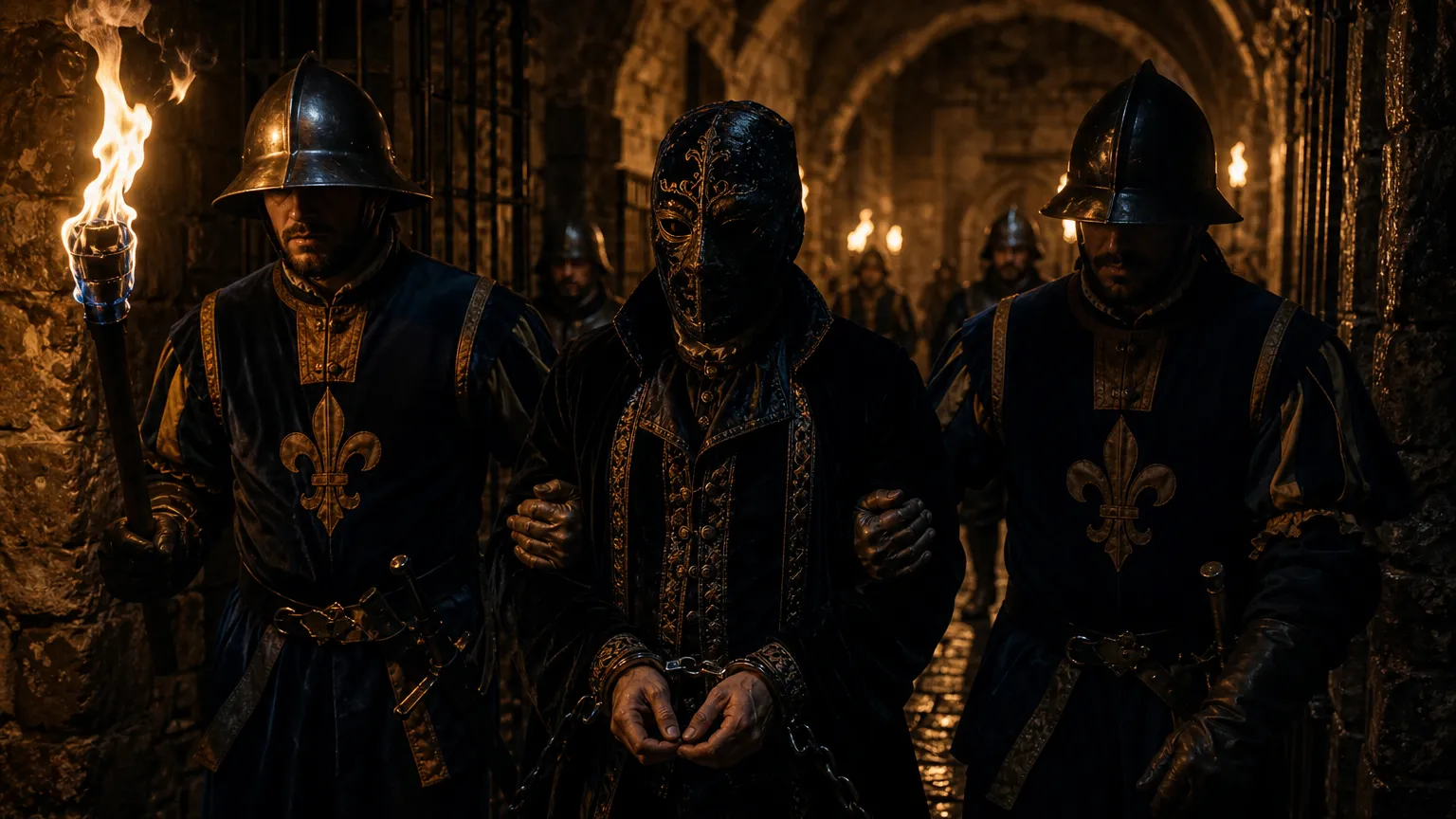
At some point in 1669, an unknown prisoner arrived at the Fortress of Pignerol, in the French Alps, in the custody of the jailer Saint-Mars. The man was covered by a mask. He never showed his face to anyone. He remained in Saint-Mars's custody for 34 years, moved with him from prison to prison as the jailer rose through the ranks, until he died in the Bastille in 1703.
His name in the death records: "Marchioly." A false identity, evidently. His face: never seen by anyone who lived to speak about it clearly.
Voltaire, who researched the case decades later, was the first to swap the velvet mask of the historical documents for an iron one in the popular imagination, and Alexandre Dumas immortalized the iron version in his novel. But the original mystery is real.
What the documents establish
The documents of the period, letters between the jailer Saint-Mars and the Minister of War, Louvois, confirm aspects of the case without resolving the essential question.
A prisoner whose identity was protected arrived at Pignerol in 1669. Saint-Mars received specific instructions to prevent anyone from having unsupervised contact with the prisoner. When Saint-Mars was transferred to the island of Sainte-Marguerite in 1687, the prisoner went with him. When Saint-Mars was appointed governor of the Bastille in 1698, the prisoner was transferred once again. He died in the Bastille on November 19, 1703.
What the documents do not reveal: his real name, the reason for the mask, and why his identity was so dangerous that it had to be hidden for decades.
The proposed identities
Eustache Dauger: the hypothesis currently most accepted among historians. Dauger was a valet who allegedly witnessed or took part in something compromising involving powerful figures, possibly the poisoning of nobles at the court of Louis XIV, a scandal that nearly destroyed the French court. Keeping him alive but invisible would be the solution for someone who knew too much to be killed but was too dangerous to be released.
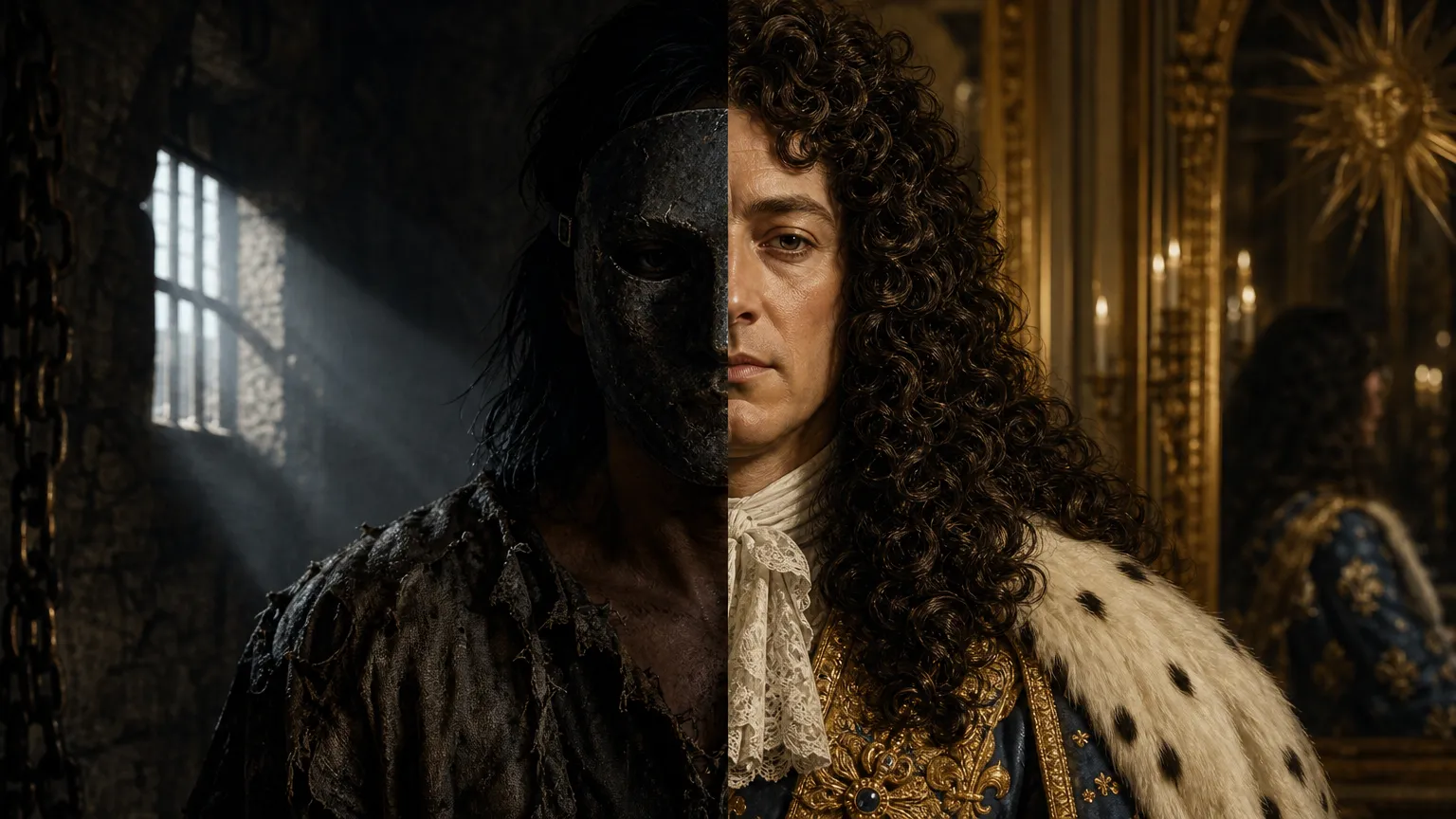
Louis XIV's twin brother: the favorite hypothesis of popular fiction. An identical twin of the king, whose existence would threaten the succession. Voltaire was the first to suggest it seriously. There is no historical evidence to support it, beyond the fact that it would be a reason powerful enough to justify such extreme precautions.
Count Mattioli: an Italian diplomat who betrayed a secret negotiation with Louis XIV and was captured. He is documented as a prisoner at Pignerol during the same period. Some historians identify Mattioli with the masked prisoner; others argue they were two different people.
Why the mask?
This is the most unsettling question. Important state prisoners were held in secret all over Europe at the time; that was not unusual. What was unusual was the mask.
The mask suggests that the prisoner's face was dangerous in itself: anyone who saw it would recognize who he was. That narrows the possibilities to someone famous enough to be recognized by guards, visitors, and other prisoners. It is a logic of erasing identity that appears in different forms in other cases: Kaspar Hauser was kept in total isolation so that he would never develop one; the Isdal Woman actively erased hers; and Anastasia Romanov had hers disputed for decades, even after her death.
If he were simply someone who knew dangerous secrets, the simplest solution would have been to keep him in total isolation, which was done anyway. The mask adds a layer of identity protection that only makes sense if the face itself was revealing.
That is consistent with the twin hypothesis (a face identical to the king's would be instantly recognizable) or with some other well-known public identity.
The case remains without a definitive resolution. Three centuries of historical research have not been enough, and the same is true of the Count of Saint-Germain, who moved through France in the decades after the masked prisoner's death without anyone knowing for sure who he was. The relevant French archives from the reign of Louis XIV were partially destroyed during the French Revolution, ironically by the same forces that tore down the Bastille in 1789.
For other prisoners and figures whose identities remain uncertain, read about Kaspar Hauser and the Isdal Woman. For 18th-century France seen from another mysterious angle, see Cagliostro and the Count of Saint-Germain.