The Isdal Woman: found dead in a Norwegian valley with no identity, no past and suitcases full of false leads
Clothes with no labels, suitcases with coded notes and at least eight false names. More than 50 years later, no one knows who she was.
- When
- November 29, 1970
- Where
- Isdalen Valley, Bergen, Norway
- Status
- Open no accepted explanation yet
By The Echoes of the Past team. Published November 2, 2026. 4 min read.

On November 29, 1970, Professor Audun Wvik and his daughters were hiking through the Isdalen Valley, near Bergen, Norway, when they came across a body.
The woman, estimated to be between 25 and 40 years old and of Mediterranean appearance, was partially burned. Around her lay liquor bottles, a few burned belongings and signs that she had swallowed a large number of pills.
The cause of death, according to the autopsy: the combination of the sleeping pills with carbon monoxide poisoning from the fire.
What the police investigation uncovered over the following weeks turned what looked like a suicide into one of the most disturbing stories of Cold War Scandinavia.
The evidence that made no sense
Every piece of clothing found with the body had its labels removed, systematically, without exception. Her fingerprints had been erased with acid or abrasion. There were no identity documents. There was nothing that could identify her directly.

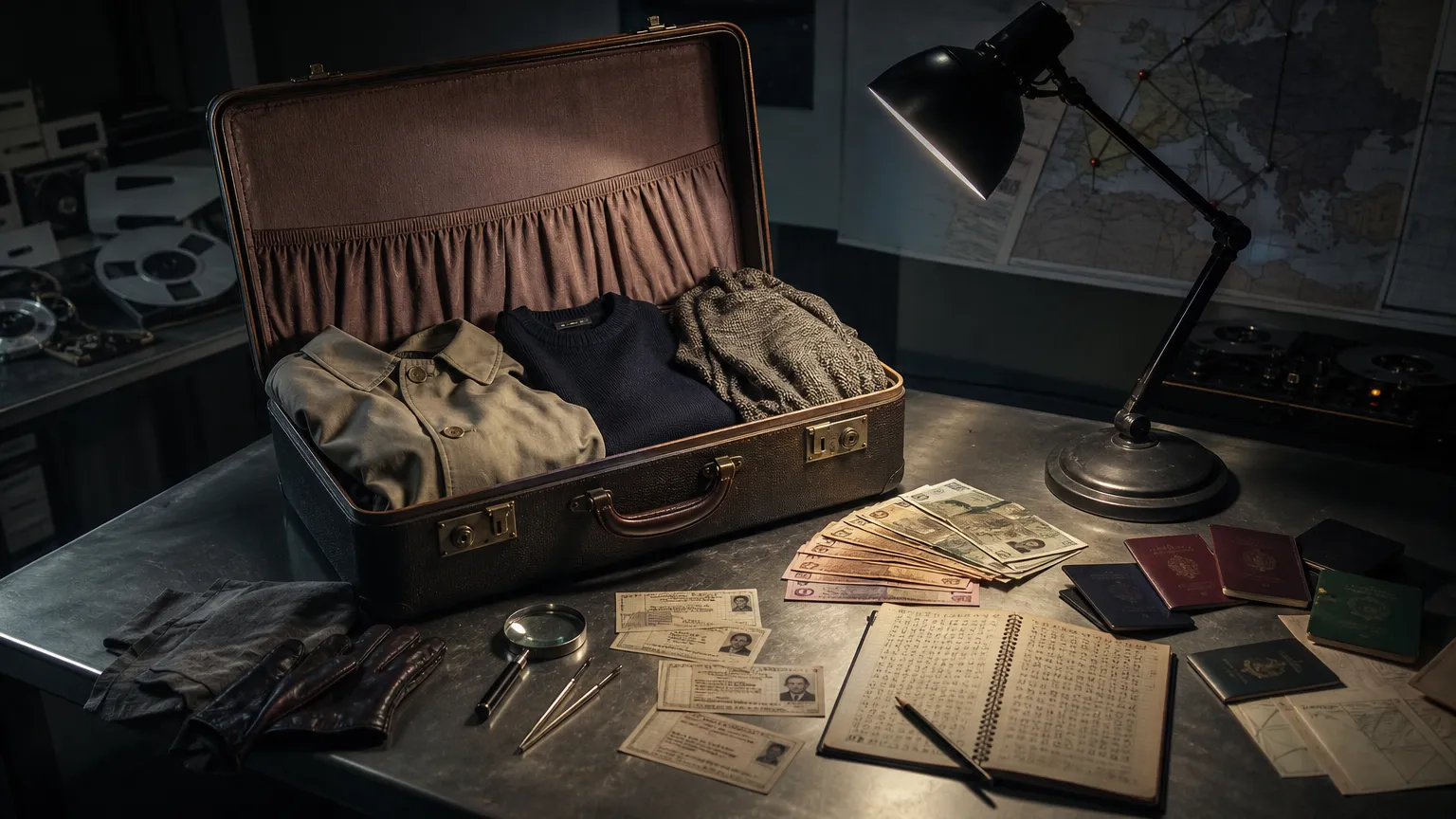
What there was: suitcases left at the train station in Bergen, which the police managed to trace. Inside them, packed with care, as if their owner expected to come back, were clothes (also without labels), cosmetics and a piece of paper with codes.
Investigators cracked the codes: they were abbreviations of European cities combined with dates and numbers. The woman had traveled widely across Europe in the months before her death.
The investigation traced her movements through hotel records. She had stayed in at least eight different cities using at least eight different identities, all with seemingly valid documents and with variations of names that appeared to be French or Belgian.
In every city, she paid in cash. She left no trail.
The Cold War, and the context that explains everything and nothing
- Norway was a NATO member. Bergen was a strategic port city with significant military installations. The Cold War was at its height.
A woman with several false identities and a travel pattern that covered European capitals and strategic port cities: the profile fits that of an intelligence agent. She is the perfect mirror image of D.B. Cooper, a case from the same decade in which someone vanished masterfully and the state never found him.
But working for which side?
Norwegian police investigated that hypothesis thoroughly and were never able to confirm a link to any known intelligence service. Neither the CIA nor the KGB, nor the British, French, Israeli or German services, ever claimed or confirmed the woman's identity, even decades later, when most such operations would no longer have been secret.
There are two possibilities: either it was an operation sensitive enough to stay secret decades after the end of the Cold War, or the spy hypothesis is wrong and there is another explanation.
What modern science has tried
In 2017, the Norwegian broadcaster NRK produced an in-depth documentary on the case, combining historical research with modern forensic analysis. The woman's DNA was extracted from preserved teeth and entered into international databases, in the hope of a match with living relatives.
As of this article's publication, no definitive match has been found.
Isotope analysis of her teeth, a technique that can indicate where a person lived as a child based on the mineral composition of the teeth, suggested that she was born around 1930 in the Nuremberg area, in southern Germany, and spent her childhood in France or near the French-German border. It is an estimate, not an identification.
The case remains officially open in Norway. The Bergen police keep the files active.
Why this case endures
The Isdal Woman remains disturbing for one specific reason: it is one of the few documented cases of a person who went to such lengths to erase every trace of her own identity, and succeeded.
In a world of digital footprints, travel records, DNA databases and surveillance cameras, the idea that someone could simply not exist in the records is hard to imagine. In 1970, it was possible. In 1669, it was even easier, and that is why the Man in the Iron Mask remains without a definitive identification more than three centuries later: the state of Louis XIV was even more efficient at erasing whatever it wanted.
Who was she? What was she doing in Norway? What happened in the Isdalen Valley? The answers may exist in some European intelligence archive that has yet to be opened. Or they may simply have vanished with the people who knew them.
Today the Isdalen Valley is a popular hiking spot near Bergen. The exact place where the body was found is marked, discreetly, by those who know where to look.
For other cases in which identity remained stubbornly unknown, read about Kaspar Hauser and the Man in the Iron Mask. For an equally final disappearance from the same era, see D.B. Cooper; for an identity that was disputed rather than erased, see Anastasia Romanov. For other 20th-century mysteries, see the Battle of Los Angeles of 1942 and the Wow! signal.