The Zone of Silence: the Mexican desert where, legend says, radios die, compasses fail and meteorites fall in droves
An American rocket crashed there in 1970, and the place gained a name and a reputation. Since then, the desert's geology has gathered layers of legend that go beyond the evidence.
- When
- 1970
- Where
- Bolsón de Mapimí, Durango, Mexico
- Status
- Partly explained the main explanation is accepted; details remain open
By The Echoes of the Past team. Published November 2, 2026. 6 min read.
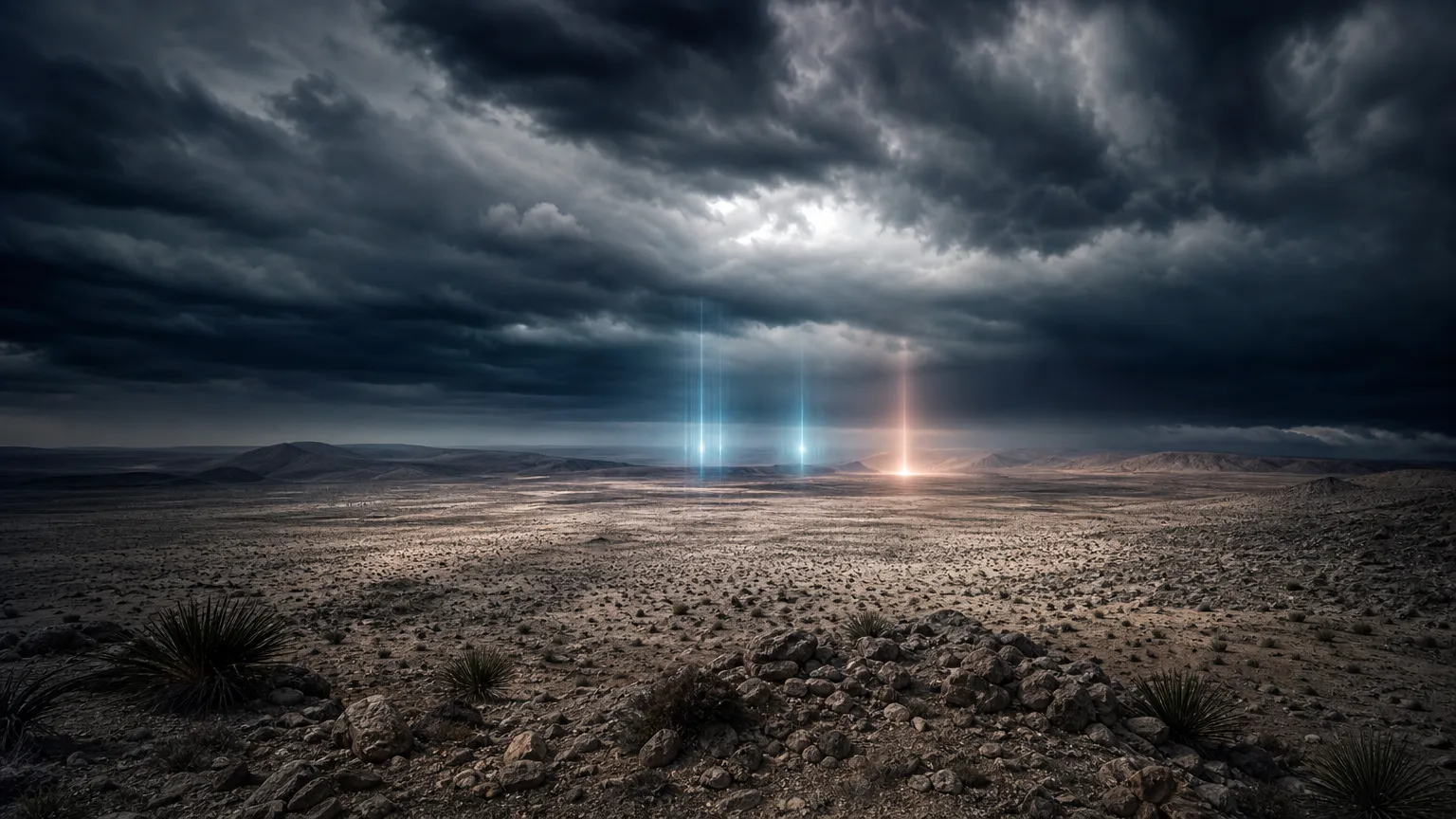
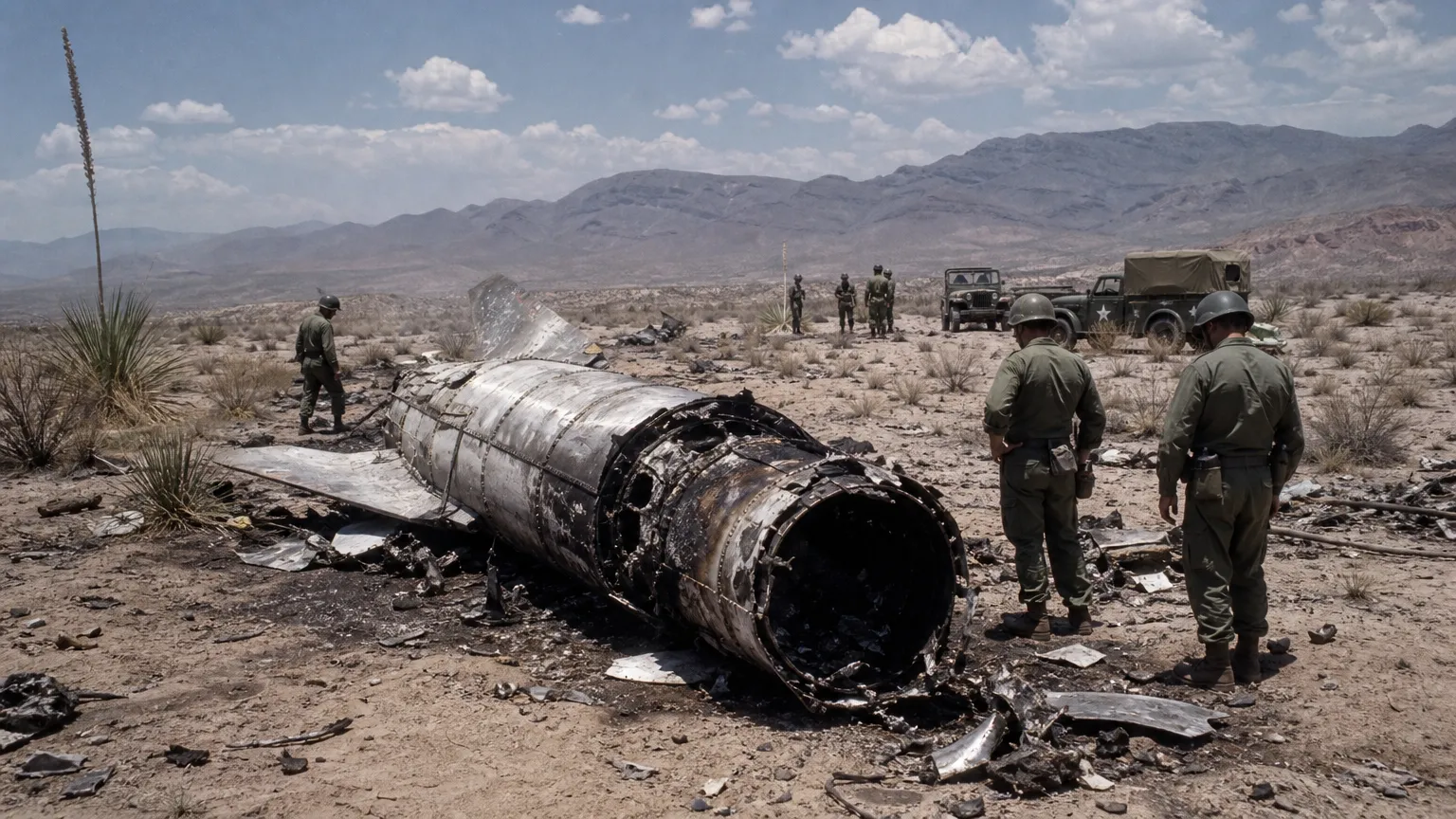
In 1970, the U.S. Air Force launched an Athena rocket from Green River, Utah, toward White Sands, New Mexico. The rocket lost control in flight and came down far to the south of where it should have, in a remote stretch of the Mexican desert between the states of Chihuahua, Durango and Coahuila.
When the American team arrived to recover the wreckage, it found an arid, practically uninhabited area. And, according to the account that has circulated ever since, it discovered something its equipment had not expected: interference with radio signals that made communication erratic or impossible.
The area came to be called the Zona del Silencio, the Zone of Silence. And the story of why radios supposedly don't work there, why compasses supposedly behave strangely, and why that particular stretch of desert has accumulated a disproportionate number of meteorites is a mix of documented geology, interesting physics and a legend that has grown far beyond the evidence.
What is geographically verified
The Zone of Silence corresponds roughly to the Bolsón de Mapimí, a closed basin with internal drainage in the Chihuahuan Desert, with no outlet to the sea, covered by a mix of salt flats, thorny scrub and sedimentary rock. It is one of the driest regions in Mexico, with less than 200 mm of rain a year.
The region lies at roughly the 27th parallel north, the same latitude as the Bermuda Triangle, the Himalayas and the Tibetan desert, a geographic coincidence that has fueled popular comparisons but has no known scientific relevance.
Radio interference in the area is widely reported. If it is a real electromagnetic anomaly, it is of a very different nature from the Wow! signal, which remains unexplained decades later: there, frequencies that should not exist, coming from directions that should not produce them. The most often cited explanation for the Zone involves the mineral makeup of the soil: the region is said to hold abnormally high concentrations of magnetic minerals (magnetite and other iron oxides), which can interfere with radio frequencies and throw off compass readings.
Magnetic anomalies of this kind exist in other parts of the world and have well-established geological explanations. What makes the Bolsón de Mapimí special is the combination of mineral concentration, extreme aridity (which leaves rock formations exposed) and an isolation that has preserved the character of the terrain.
The meteorites
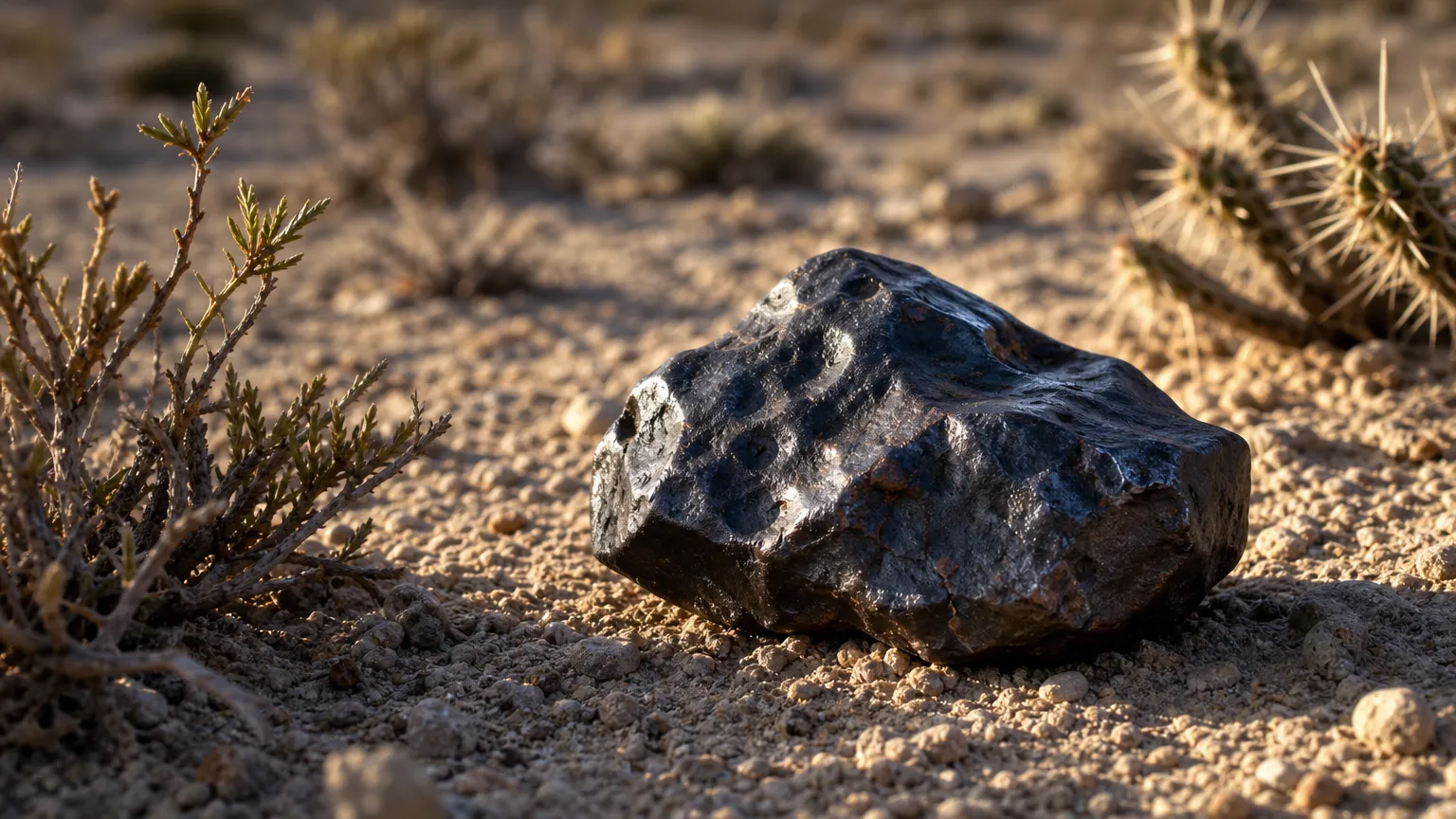
The concentration of meteorites in the region is the most genuinely intriguing fact, and the most verifiable one.
The Zone of Silence has one of the highest concentrations of meteorites found per unit of area anywhere in Mexico. Several scientifically important specimens have been recovered there, including rare carbonaceous fragments that contain amino acids and other organic compounds of astrobiological interest.
The scientific explanation is less dramatic than local mythology: extreme aridity preserves meteorites (which oxidize quickly in humid regions), sparse vegetation makes them easier to spot on the ground, and the flat terrain of the salt flats makes dark objects easy to detect. Arid regions around the world, such as the Atacama, the Sahara and Antarctica, concentrate meteorites for the same reasons.
That does not mean the concentration at Mapimí is not real or significant. It means the explanation may be geological and climatic, not necessarily tied to the region's magnetic anomalies.
There is also a hypothesis, unproven: that both phenomena share the same geological cause, and that the mineral concentrations that make the region magnetically distinct are a sign of a history of extraterrestrial impacts that enriched the soil with meteoritic material over millennia.
The stories that grew
Around the verifiable data, a considerable mythology has grown up about the Zone of Silence.
UFO sightings are regularly reported by locals and visitors, especially since the American rocket incident of 1970, which brought military and government activity to the region and, inevitably, speculation. The Mapimí Biosphere Reserve, which covers part of the area, has access rules that, for some, have become "proof" that the government is hiding something.
There are reports of unusual albino animals in the region, such as white snakes and tortoises with white shells, which some take as a sign of radiation or of genetic anomalies caused by the site's properties. Biologists who have studied the area's fauna find albinism at rates within the normal range for small, isolated populations, with nothing to suggest an external cause.
The region's flora includes cacti and plants with unusual geometric shapes, which have fed stories of "mutations." Botanists identify these shapes as normal evolutionary adaptations to extreme aridity and heat, not as anomalies.
What happens in the Zone of Silence is the reverse of what happens in most historical mysteries: instead of trying to explain something genuinely inexplicable, we are watching unusual geology (the verifiable concentration of meteorites, the magnetic anomalies attributed to the soil) gather layers of interpretation that go beyond what the evidence supports.
What science is investigating now
The Mapimí Biosphere Reserve was established in 1979 and has produced legitimate scientific research on desert ecology, the adaptation of wildlife to extreme environments and the geology of the Bolsón.
Researchers at UNAM's Institute of Astronomy have studied the distribution of meteorites in the region with modern mapping methods. The concentration is being documented and cataloged, and some specimens have significant scientific value, including carbonaceous chondrites that may yield information about the composition of the early solar system.
The magnetic anomaly itself is being mapped with greater precision by Mexican geophysicists. Understanding the geological structure behind it could have implications for mineral prospecting models in the region.
What will probably not be found: dimensional portals, UFO bases or mystical energies. What may be found: unusual geology, with real physical properties that are still being better understood.
Why the myth persists
The Zone of Silence is a case study in how human beings respond to the unknown. We have instruments that stop working, an arid and alien landscape, a history of objects falling from the sky (the American rocket, the meteorites) and the feeling of being in a place where the normal rules do not apply. That pattern, the unknown in the sky turned into narrative, also shows up in the Battle of Los Angeles in 1942, when the American military fired 1,400 rounds at something no one was ever able to identify.
That combination is powerful enough to generate narratives that fill the gaps with whatever our culture offers as an explanation for the inexplicable: hidden forces, visitors from other worlds, energies that conventional science does not recognize.
The fact that conventional science has partly satisfying explanations does not undo the physical impact of a radio falling silent in the middle of the desert, or of a compass that spins without finding north.
Some experiences are stronger than the explanations.
Mexico is not the only place where geophysical anomalies have given rise to tales of mystery. Read also about Queimada Grande Island, in Brazil, another forbidden place, for far more concrete reasons, and about the Dyatlov Pass incident, where the extreme environment was so frightening that the victims left their tent, in subzero cold, without proper clothing. For an event in which the sky really did fall, see the Tunguska event.